
June is here, and with it comes one of the busiest periods of the rental season.
Families are planning moves before the next school year. Students are relocating. Professionals are changing jobs. Across the Greater Seattle area, renters are actively searching for their next home.
However, the June 2026 rental market looks different than it did just a month ago.
The market has become more balanced. Properties are taking slightly longer to lease. Tenants have more choices. Negotiation is becoming increasingly common.
That does not mean demand has disappeared.
Many Seattle-area landlords are still achieving strong rental rates, particularly when properties are priced correctly, marketed professionally, and positioned competitively.
This guide breaks down the June 2026 rental market for 3-bedroom single-family homes across Bellevue, Redmond, Kirkland, Seattle, Sammamish, Bothell, and Lynnwood, and explains what these trends mean for landlords and real estate investors.
June 2026 Rental Market Snapshot
Here’s what we’re seeing in the Seattle rental market right now.
Overall Market Trends
| Metric | May 2026 | June 2026 | Change |
|---|---|---|---|
| Average Days on Market | 30-40 days | 35-45 days | 5-10 days slower |
| Vacancy Rate | 3.5-4.5% | 4.0-5.0% | +0.5% higher |
| Applications per Listing | 4-6 | 3-5 | Slight decrease |
| Rental Prices | Slight downward pressure | Stable to slight decline | -0.5% to -1% |
| Tenant Negotiation | Moderate | Increasing | More common |
What This Means
June is slower than May.
The spring leasing rush has largely ended, while the strongest summer moving activity has not fully arrived. It is a transition month for many Seattle-area landlords.
Those following leasing activity earlier this year may notice that marketing timelines have increased compared to last month. You can learn more about the Seattle rental market in May 2026 to see how conditions shifted heading into summer.
Tenants are still moving, but they are moving more carefully. More listings are available, which means renters have additional choices and more leverage during lease negotiations.
What the Broader Seattle Rental Market Shows
The single-family home trends shown in this report align with broader housing indicators throughout the region.
According to Zillow Research, Seattle remains one of the most expensive rental markets in the Pacific Northwest, supported by a strong employment base and continued housing demand.
According to the U.S. Census Bureau Housing Vacancy Survey, vacancy rates have increased in many metropolitan areas nationwide as new housing inventory enters the market.
According to the Seattle Office of Planning and Community Development, Seattle continues to benefit from population growth, major employers, and ongoing economic activity that supports long-term housing demand.
These broader trends help explain why Seattle-area rents remain relatively stable despite slower leasing activity compared to earlier this year.
Landlords who want additional context can learn more about Seattle’s recent rental market slowdown and how it is affecting leasing activity across the region.
Is Your Rental Priced for Today’s Summer Market?
June’s rental market is more competitive than earlier this year. A rental analysis can help you understand your property’s current market value, expected leasing timeline, and how it compares to similar homes in your area.
3-Bedroom Single-Family Home Rental Rates (June 2026)
Below is the average rental performance for seven major Greater Seattle markets.
| Neighborhood | Average Rent | YoY Change | Vacancy Rate | Days to Fill |
|---|---|---|---|---|
| Bellevue | $4,850 | +4.2% | 3.2% | 32-38 days |
| Redmond | $4,600 | +3.8% | 3.0% | 30-35 days |
| Kirkland | $4,500 | +3.5% | 3.5% | 33-40 days |
| Seattle | $3,950 | +5.1% | 4.2% | 35-42 days |
| Sammamish | $3,246 | +2.1% | 3.8% | 38-45 days |
| Bothell | $3,010 | +2.3% | 4.0% | 36-42 days |
| Lynnwood | $2,900-$3,010 | +1.8% | 4.5% | 40-48 days |
How Much Is the Average Rent in Seattle This June?
Many landlords ask how single-family home rents compare to overall Seattle rental averages.
For June 2026, average apartment rents across Seattle generally range from approximately $2,100 to $2,400 per month, depending on location, unit size, and amenities.
However, the average rent for a 3-bedroom single-family home in Seattle is approximately $3,950 per month, based on current leasing activity and active market listings.
This difference highlights why landlords should avoid comparing detached homes directly to apartment market averages. Families renting single-family homes are often paying for additional space, parking, storage, yards, school districts, and neighborhood amenities.
For additional pricing guidance, learn more about accurately pricing your rental property in today’s market and learn more about rental pricing strategies.
Reduce Vacancy During Seattle’s Summer Leasing Season
More inventory and longer leasing timelines mean pricing, marketing, and responsiveness matter more than ever. Discover how your property compares to today’s market and what steps can help attract qualified tenants faster.
Market Tier Analysis
Premium Tier: Bellevue and Redmond
In a slower market, visibility matters more.
List everywhere. Use professional photos and video. Be visible across every major platform.
Market Overview
- Rent Range: $4,600-$4,850/month
- Vacancy Rate: 3.0-3.2%
- Days to Fill: 30-38 days
- Market Condition: Tight
These remain the strongest rental markets in the Greater Seattle area.
Tech workers, high-income professionals, and families seeking premium housing continue to drive demand.
Bellevue
- Rent Range: $4,600-$4,850/month
- Vacancy Rate: 3.0-3.2%
- Days to Fill: 30-38 days
- Market Condition: Tight
These remain the strongest rental markets in the Greater Seattle area.
Tech workers, high-income professionals, and families seeking premium housing continue to drive demand.
Redmond
- Average Rent: $4,600/month
- Year-over-Year Growth: +3.8%
- Vacancy Rate: 3.0%
Redmond remains one of the tightest rental markets in the region, supported by major technology employers and a highly educated workforce.
Mid-Tier Markets: Kirkland and Seattle
Mid-Tier Markets: Kirkland and Seattle
- Reply to inquiries quickly
- Return calls same day
- Schedule tours within 24 hours
- Follow up after showings immediately
Market Overview
- Rent Range: $3,950-$4,500/month
- Vacancy Rate: 3.5-4.2%
- Days to Fill: 33-42 days
- Market Condition: Balanced
These markets continue to attract professionals, families, and long-term renters seeking a balance between affordability and lifestyle.
Kirkland
- Average Rent: $4,500/month
- Year-over-Year Growth: +3.5%
- Vacancy Rate: 3.5%
Kirkland remains stable due to its waterfront location, community feel, and strong school districts.
Seattle
- Average Rent: $3,950/month
- Year-over-Year Growth: +5.1%
- Vacancy Rate: 4.2%
Seattle is particularly interesting this month.
Rents are up 5.1% year over year despite slower leasing activity across parts of the region. This suggests strong underlying demand for Seattle proper compared to some suburban markets.
Demand continues to be supported by employment centers, walkability, transit access, entertainment, and lifestyle amenities.
See How Your Property Compares in Today’s Market
Every neighborhood is performing differently this summer. Get a personalized rental analysis based on your property’s location, condition, and current demand so you can make informed leasing decisions.
Value Tier Markets: Sammamish, Bothell, and Lynnwood
Small incentives can make a difference in a slower market.
Market Overview
- Rent Range: $2,900-$3,246/month
- Vacancy Rate: 3.8-4.5%
- Days to Fill: 36-48 days
- Market Condition: Softer
These neighborhoods are experiencing slower leasing activity compared to Bellevue and Redmond.
Sammamish
- Average Rent: $3,246/month
- Year-over-Year Growth: +2.1%
Bothell
- Average Rent: $3,010/month
- Year-over-Year Growth: +2.3%
Lynnwood
- Average Rent: $2,900-$3,010/month
- Year-over-Year Growth: +1.8%
Landlords in these markets should expect longer marketing periods and increased competition.
Owners preparing for the busy summer season can learn more about summer tenant turnover in Seattle and how seasonal demand affects leasing performance.
June 2026 Rental Market Reality
The Good News
- Prices Remain Stable
Most neighborhoods continue to hold rental rates despite softer leasing conditions. - Premium Markets Remain Strong
Bellevue and Redmond continue to outperform most surrounding markets. - Tenant Quality Remains High
Although applications have declined slightly, landlords still have opportunities to select qualified renters. - Summer Demand Is Still Ahead
July and August historically produce some of the strongest leasing activity of the year.
The Challenges
1. The Market Is Slower Than May
Properties are taking approximately 35-45 days to lease compared to 30-40 days in May.
That difference may not sound significant, but an additional week or two of vacancy can have a meaningful impact on annual rental income.
Landlords comparing current conditions to earlier this spring can learn more about the Seattle rental market in May 2026 and see how quickly leasing activity shifted heading into summer.
2. Vacancy Is Increasing
Vacancy rates have increased by approximately 0.5% compared to May.
More available inventory means more competition for renters, particularly in value-tier markets where tenants often have several comparable options.
Landlords who want to stay competitive should focus on pricing, presentation, and responsiveness. To improve occupancy, learn more about reducing rental vacancy and learn more about reducing vacancy time between tenants.
3. Tenant Negotiation Is Increasing
Today’s renters are taking more time to compare properties.
Many prospective tenants are asking for:
- Flexible move-in dates
- Longer decision periods
- Small rent concessions
- Lease term flexibility
While landlords do not need to accept every request, understanding current tenant expectations can help reduce vacancy periods.
4. Value-Tier Markets Face More Competition
Sammamish, Bothell, and Lynnwood continue to experience softer market conditions than Bellevue and Redmond.
This does not mean properties are not leasing.
It simply means owners need to work harder to stand out.
Professional photos, competitive pricing, and prompt communication matter more than ever.
Ready to Price Your Rental Correctly?
Calculate Your Rental Potential
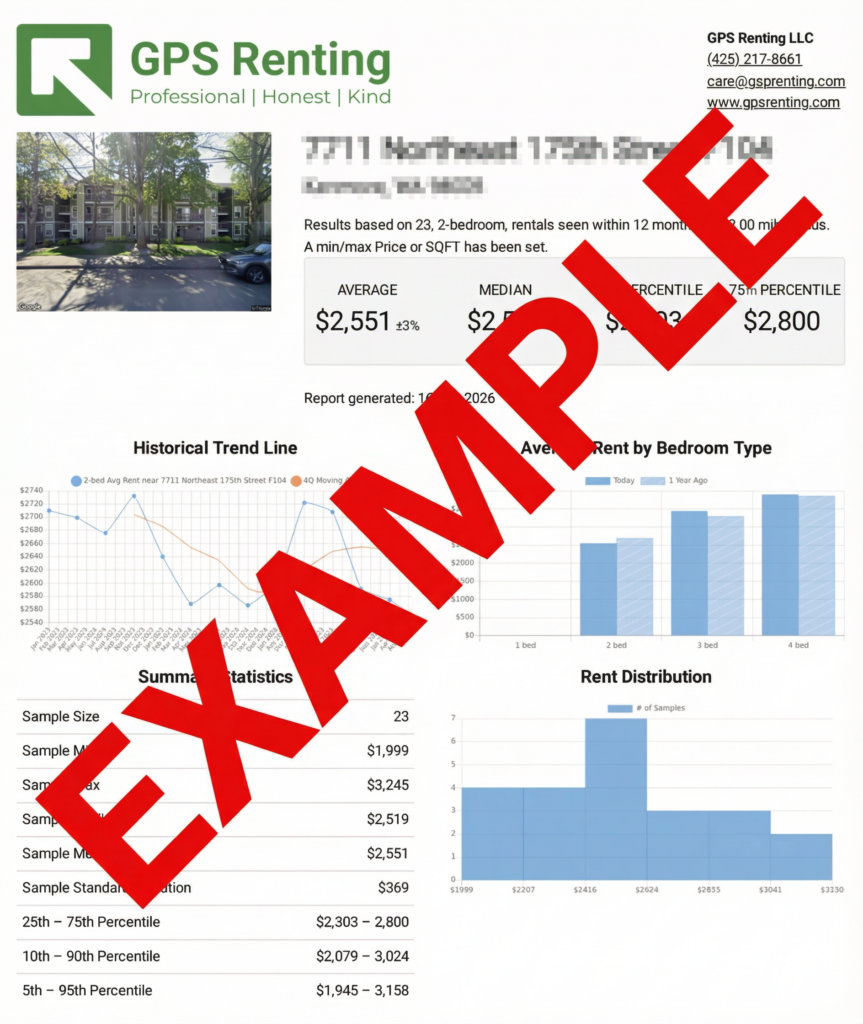
Use our True Cost Calculator to understand your property’s value and rental potential. Input your address and see:
- What your property is worth today
- What you’d net if you sold
- What you’d earn if you kept it as a rental
- How your neighborhood compares
What Seattle Landlords Should Watch This Summer
Several economic and housing factors could influence rental performance through the remainder of 2026.
New Apartment Supply
Seattle continues to see additional apartment inventory entering the market.
According to the U.S. Department of Housing and Urban Development (HUD), increasing housing supply can help stabilize rent growth over time.
For single-family landlords, this primarily creates additional competition for renters rather than causing major rent declines.
Mortgage Rates
According to the Freddie Mac Primary Mortgage Market Survey, mortgage rates remain elevated compared to historical lows.
Higher borrowing costs continue to make homeownership less affordable for many households, which keeps some would-be buyers in the rental market longer.
This trend helps support rental demand throughout the Seattle region.
Employment Trends
According to the Washington State Employment Security Department, employment growth remains one of the strongest indicators of future housing demand.
The continued presence of major employers in Seattle, Bellevue, and Redmond remains a positive factor for rental housing demand.
How to Adapt Your Strategy for June
If you’re listing a property in June, here are several ways to remain competitive.
Strategy 1: Price at Market Rate
Do not underprice your property simply to attract attention.
Instead, price according to:
- Neighborhood
- Property condition
- Amenities
- School district
- Competition
Current market rates remain strong in most Seattle-area submarkets.
Landlords evaluating pricing decisions can learn more about rental pricing strategies and learn more about accurately pricing your rental property in today’s market.
Strategy 2: Market Aggressively
Marketing matters more in a balanced market.
List on:
- Zillow
- Apartments.com
- Facebook Marketplace
- Craigslist
- Nextdoor
- Property management websites
Marketing materials should include:
- Professional photography
- Video walkthroughs
- Detailed descriptions
- Accurate pricing
- Virtual tours when possible
If your property is not generating interest, learn more about why your rental isn’t getting applications.
Strategy 3: Respond Quickly
Speed matters.
Many prospective renters schedule multiple showings within a single day.
Responding quickly can be the difference between securing a qualified applicant and losing them to another property.
Aim to:
- Return calls the same day
- Respond to inquiries within one hour
- Schedule showings quickly
- Follow up consistently
Strategy 4: Offer Strategic Incentives
Small incentives can make a difference without significantly reducing profitability.
Examples include:
- Flexible move-in dates
- Lease term flexibility
- Minor rent concessions
- Included services or utilities where appropriate
The goal is to reduce vacancy, not simply lower rent.
Strategy 5: Improve Property Presentation
Small improvements often produce significant leasing benefits.
Consider:
- Fresh paint
- Professional cleaning
- Landscaping improvements
- Updated fixtures
- Professional listing photos
Properties that present well typically receive stronger applicant interest and shorter vacancy periods.
Strategy 6: Screen Carefully
A bad tenant can cost thousands of dollars in lost rent, legal fees, damages, and turnover expenses.
Strong screening remains one of the most effective ways to protect rental income.
A quality screening process should include:
- Income verification
- Rental history verification
- Reference checks
- Credit review
- Compliance with applicable fair housing laws
To strengthen your process, learn more about tenant screening criteria and learn more about tenant screening mistakes that cost landlords thousands.
June Rental Market Outlook
What to Expect in June
Current conditions suggest:
- Slower leasing activity than May
- 35-45 days on market
- Stable rental pricing
- Increased tenant negotiation
- Higher inventory levels
What to Expect in July
Historically, July becomes more active.
Expect:
- More family relocations
- Increased rental inquiries
- More applications per listing
- Improved leasing activity
Owners preparing for this seasonal shift can learn more about summer tenant turnover in Seattle and prepare properties before demand peaks.
What to Expect in August
August is typically one of the strongest leasing months of the year.
Historically, landlords see:
- Peak demand
- Faster leasing times
- Increased competition among renters
- Strong applicant volume
Well-prepared properties often lease quickly during this period.
Need Help Navigating This Market?
Schedule a Consultation
Market shifts can make pricing, leasing, and tenant placement more complex than expected.
If you’d rather focus on your investment while professionals handle pricing strategy, marketing, and tenant screening, we’re here to help.

Haobang Lu
Business Development Manager
FAQs
What is the average rent for a 3-bedroom home in Seattle in June 2026?
- The average rent for a 3-bedroom single-family home in Seattle is approximately $3,950 per month.
Is June a good time to list a rental property?
- Yes. June remains an active leasing month, although it is generally slower than the spring peak season.
Which Seattle-area city has the highest rents?
- Bellevue currently leads the markets covered in this report with average rents of approximately $4,850 per month.
Are Seattle rents increasing or decreasing?
- Most areas are experiencing stable rents with modest year-over-year growth, although pricing pressure has softened compared to earlier in the year.
Why are homes taking longer to rent?
- Increased inventory and more tenant choices have extended leasing timelines across many Seattle-area markets.
Are tenants negotiating more in 2026?
- Yes. Renters generally have more options today than they did during tighter market conditions.
Should landlords lower rent to attract tenants?
- Not necessarily. Strategic pricing is more important than simply offering discounts.
What improvements help lease a property faster?
- Professional photography, cleaning, fresh paint, landscaping, and responsive communication often provide the greatest return.
Will the Seattle rental market improve later this summer?
- Historically, July and August generate stronger leasing activity than June.
What is the biggest mistake landlords make during slower markets?
- Many owners wait too long to adjust pricing, improve marketing, or respond to inquiries. Small delays can significantly increase vacancy costs.
Ready to Maximize Your June Rental Income?
June 2026 is a transition month.
The market is slower than May, but demand remains healthy throughout much of the Greater Seattle area.
Landlords who price correctly, market effectively, and screen carefully are still achieving strong results.
If you’d rather focus on other priorities while professionals handle leasing, marketing, tenant screening, maintenance coordination, and ongoing property management, GPS Renting can help.
We closely monitor Seattle-area rental trends and adapt strategies as market conditions change.
Sources
According to Zillow Research
https://www.zillow.com/research/data/
According to the U.S. Census Bureau Housing Vacancy Survey
https://www.census.gov/housing/hvs/
According to the Seattle Office of Planning and Community Development
https://www.seattle.gov/opcd/population-and-demographics/about-seattle
According to the U.S. Department of Housing and Urban Development (HUD)
https://www.huduser.gov/
According to the Freddie Mac Primary Mortgage Market Survey
https://www.freddiemac.com/pmms
According to the Washington State Employment Security Department
https://esd.wa.gov/labormarketinfo

Written by Nick He, Founder of GPS Renting
Nick He founded GPS Renting with the mission of providing professional, honest, and kind property management throughout the Greater Seattle area. Through years of working directly with Seattle landlords and residents, Nick has developed extensive experience handling lease compliance issues, tenant communication challenges, property operations, and Washington landlord-tenant regulations. His landlord and tenant guides are designed to help rental property owners navigate complex situations with practical strategies, clear documentation practices, and real-world operational insight tailored to Seattle’s evolving rental market.