
You’ve probably noticed it. The rental market isn’t as hot as it was in March and April.
Properties are staying on the market longer. Fewer applications per listing. More negotiation from tenants.
Welcome to May. The market is shifting.
This isn’t a crisis. It’s normal. Every market has seasonal patterns. But if you don’t adapt your strategy, you’ll feel the slowdown in your wallet.
This guide walks you through exactly what’s happening in the May 2026 Seattle rental market and how to adapt your strategy to stay competitive.
We also created a short video covering the recent slowdown in Seattle’s rental market and what landlords can do to stay competitive as leasing activity changes heading into summer.
What's Happening in May 2026
Let’s start with the data. Here’s what we’re seeing in the Seattle rental market right now:
May 2026 Market Snapshot
| Metric | April | May | Change |
|---|---|---|---|
| Avg Days on Market | 18 to 25 days | 30 to 40 days | +50% slower |
| Vacancy Rate | 2.5 to 3% | 3.5 to 4.5% | +40% higher |
| Tenant Applications per Listing | 8 to 12 | 4 to 6 | -50% fewer |
| Rental Price | Stable | Slight downward pressure | -1 to 2% |
| Tenant Negotiation | Minimal | Moderate | More common |
You can also learn more about the earlier spring market conditions in our Seattle Rental Market April 2026 update.
What This Means
The spring rush is over. The market is normalizing. Fewer people are moving in May than in April. More properties are available. Tenants have more choices.
This is a shift from a landlord’s market during spring into a more balanced market heading into late spring and early summer.
According to Zillow rental market research and Apartments.com market trend reports, Seattle continues to experience strong long-term rental demand, but tenant behavior has become noticeably more selective as inventory levels increase.
Sources:
Why the Market is Slowing
There are several reasons for the May slowdown:
1. Spring Rush is Over
April and early May are peak moving months. But by late May, the spring rush starts winding down. Fewer families are relocating for summer jobs. Fewer students are moving.
2. School Year Timing
Most families don’t want to move in the middle of the school year. Many households wait until June or July when school officially ends.
3. Weather Variability
Seattle weather in May is unpredictable. Rain, cold mornings, occasional sunshine. Many tenants delay moving plans until the more stable summer months.
4. Summer Vacation Timing
People start focusing on vacations and travel during late spring. Housing decisions often get pushed into June.
5. More Supply
More landlords list properties during May. More supply combined with lower urgency naturally slows the market.
According to Realtor.com housing trend analysis, inventory increases in many metro markets are contributing to longer leasing timelines and increased tenant negotiation activity.
Source:
Stay Ahead of Seattle’s Rental Market Slowdown
A slower rental market means pricing, marketing, and response time matter more than ever. Learn how strategic leasing and faster adaptation can help reduce vacancy and attract stronger tenants.
The Numbers: What Slowdown Means for Your Wallet
Let’s talk about the financial impact.
April Scenario (Fast Market)
- List property: April 1
- Showings start: April 2 to 5
- Tenant selected: April 10
- Move-in: May 1
- Vacancy: 30 days
- Vacancy cost: $3,000 to $4,500
May Scenario (Slow Market Without Strategy Change)
- List property: May 1
- Showings start: May 5 to 15
- Tenant selected: May 25
- Move-in: June 1
- Vacancy: 31 days
- Vacancy cost: $3,000 to $4,500
Difference: Same vacancy cost, but you’re competing harder for the same tenant.
May Scenario (Slow Market With Strategy Change)
- List property: April 25
- Showings start: May 1 to 5
- Tenant selected: May 12
- Move-in: May 25
- Vacancy: 25 days
- Vacancy cost: $2,500 to $3,750
Difference: You save $500 to $750 simply by adapting your strategy earlier.
You can learn more about reducing vacancy losses in our guide on how to reduce vacancy time between tenants.
Strategy #1: Price at Market — Then React Fast
In a slower market, your speed of adjustment matters as much as the starting price.
What to Do
- Start at true market rent based on real-time demand
- Use self-showing systems to maximize access
- Track inquiries, tours, and applications daily
- React quickly if demand is weak
Decision Rule
If you’re getting fewer than four showings per week during the first two weeks, consider a meaningful price adjustment immediately.
According to Zillow, listings that sit too long often lose visibility and tenant attention.
Source:
Current May 2026 Pricing Reference
| Neighborhood | 3-Bed SFH Rent |
|---|---|
| Bellevue | $4,850 |
| Redmond | $4,600 |
| Kirkland | $4,500 |
| Seattle | $3,950 |
| Bothell | $3,010 |
| Lynnwood | $2,900 to $3,010 |
You can learn more about rental pricing strategy in our article about how to accurately price your rental in today’s market.
Longer Vacancy Times Are Becoming More Common
Seattle’s rental market is slowing compared to earlier this spring. Properties that are overpriced or slow to respond are sitting longer and costing landlords more in missed rent.
Strategy #2: Market More Aggressively
In a slower market, visibility matters more.
What to Do
List everywhere. Use professional photos and video. Be visible across every major platform.
Important Platforms
- Zillow
- Apartments.com
- Craigslist
- Facebook Marketplace
- Nextdoor
- Your own website
Marketing Materials That Matter
- Professional photography
- Video walkthroughs
- Virtual tours
- Detailed listing descriptions
- Self-showing access
According to the National Association of Realtors, high-quality listing photos and virtual experiences significantly improve online engagement and showing activity.
Source:
You can learn more about modern showing systems in our guide on Seattle virtual tours and self-showings
Strategy #3: Respond Faster
In a slower market, responsiveness matters more than ever.
What to Do
- Reply to inquiries quickly
- Return calls same day
- Schedule tours within 24 hours
- Follow up after showings immediately
Why It Matters
Tenants today have more options. The landlord who responds faster often wins the application.
According to HubSpot response-time studies, lead conversion rates decline dramatically when businesses delay follow-up responses.
Source:
You can learn more about operational efficiency in our article on how GPS Renting minimizes vacancy days.
Seattle Tenants Are Comparing More Rentals Than Before
With more listings hitting the market this summer, tenants are becoming more selective about pricing, condition, and responsiveness. Small improvements can make a major difference in leasing speed.
Strategy #4: Offer Incentives Strategically
Small incentives can make a difference in a slower market.
Good Incentives
- Flexible move-in dates
- Short-term lease flexibility
- Included parking
- Limited move-in specials
Bad Incentives
- Large price cuts
- Waiving security deposits
- Weakening screening standards
According to Freddie Mac rental housing analysis, prolonged vacancy often costs landlords more than reasonable short-term leasing incentives.
Source:
Strategy #5: Improve Your Property
In a slower market, property condition matters more.
Quick Improvements
- Fresh paint
- Professional cleaning
- Landscaping
- Updated lighting
- Better listing photos
Tenants compare more properties during balanced markets. Better presentation directly improves leasing performance.
You can learn more about property improvement ROI in our article about maximizing rental property ROI with Seattle upgrades.
Strategy #6: Improve Your Screening
Don’t lower standards just because the market slows down.
Strong Screening Still Matters
- Income verification
- Credit checks
- Eviction history
- Employment verification
- Previous landlord references
According to TransUnion SmartMove, poor tenant screening can create significant long-term financial losses through delinquency, turnover, and eviction expenses.
Source:
You can learn more about avoiding costly screening issues in our guide on tenant screening mistakes that cost landlords thousands.
Ready to Price Your Rental Correctly?
Calculate Your Rental Potential
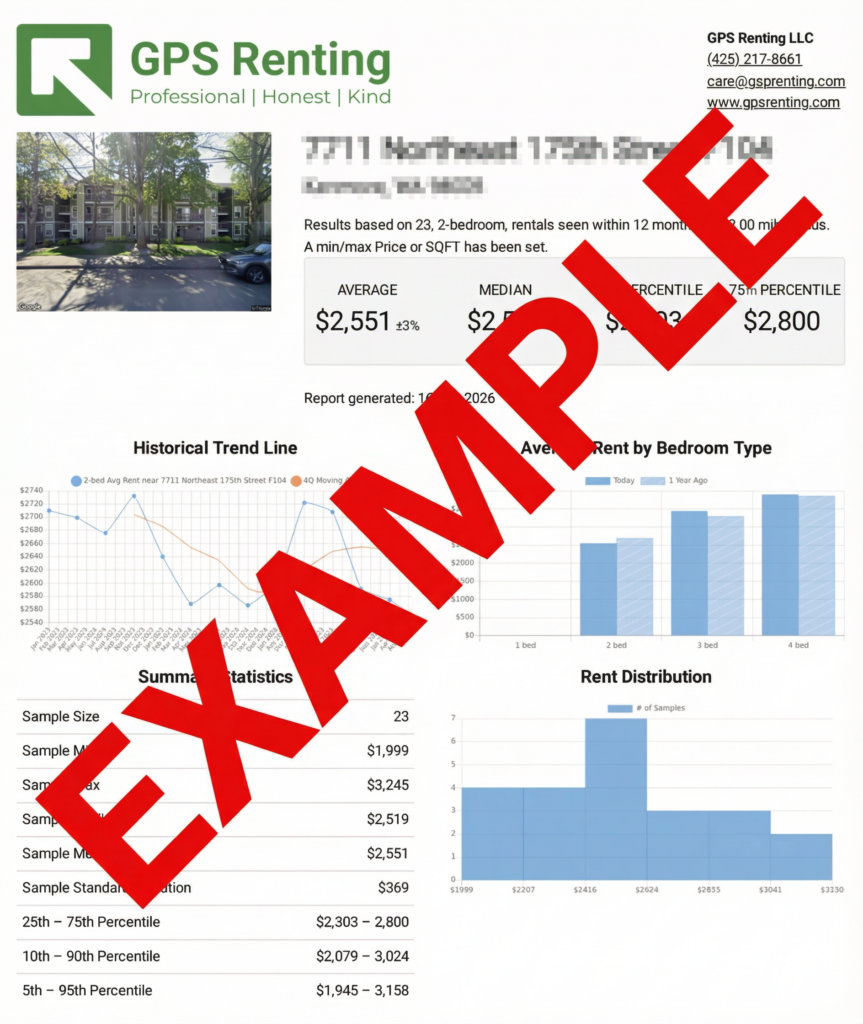
Use our True Cost Calculator to understand your property’s value and rental potential. Input your address and see:
- What your property is worth today
- What you’d net if you sold
- What you’d earn if you kept it as a rental
- How your neighborhood compares
The May Rental Market Reality
Here’s the honest truth about May 2026.
It’s a Transition Month
- May sits between the spring rush and the larger summer moving season.
It’s Still Competitive
- Even though activity slowed, landlords still need strong pricing, marketing, and communication strategies to succeed.
It’s an Opportunity
- Balanced markets allow landlords to focus more on quality tenants, better operations, and long-term stability.
It Requires Adaptation
- If you use April strategies during May conditions, you’ll likely feel the slowdown more aggressively.
You can also learn more about reducing turnover risk in our article about how Seattle landlords can reduce tenant turnover without cutting rent.
The Kindness Angle
A slower market can actually create better conditions for tenants and landlords alike.
In extremely competitive markets, tenants often feel rushed and pressured. In balanced markets, landlords have more opportunities to focus on responsiveness, fairness, communication, and long-term tenant quality.
Better experiences usually create better tenant relationships and lower turnover over time.
Ready to Navigate the Slowdown?
The May rental market is slower. But it is not a crisis.
It is an opportunity to adapt.
If you’d rather focus on your investment while professionals handle marketing, pricing strategy, tenant screening, and leasing operations, GPS Renting can help.
Learn more about our Seattle property management services.
Need Help Navigating This Market?
Schedule a Consultation
Market shifts can make pricing, leasing, and tenant placement more complex than expected.
If you’d rather focus on your investment while professionals handle pricing strategy, marketing, and tenant screening, we’re here to help.

Haobang Lu
Business Development Manager
FAQs
Why is the Seattle rental market slowing down in May 2026?
The market is slowing primarily because the peak spring moving season is ending, inventory levels are increasing, and tenants have more options available. Seasonal movement patterns are common in Seattle and often create temporary slowdowns during late spring.
Are Seattle rents dropping in 2026?
Most Seattle-area rents are not collapsing, but some landlords are experiencing mild downward pricing pressure, especially if properties are overpriced or poorly marketed compared to competing listings.
How long are Seattle rental properties staying vacant right now?
Many rental homes are currently taking around 30 to 40 days to lease during May 2026, depending on location, pricing, condition, and marketing strategy.
What is the best way to reduce vacancy during a slower market?
Strong pricing strategy, fast communication, professional marketing, flexible showings, and high-quality tenant screening remain the most effective ways to reduce vacancy risk.
Should landlords lower screening standards during slower rental markets?
No. Lowering screening standards can create much larger long-term financial risks. Strong screening remains essential even during slower leasing seasons.

Written by Nick He, Founder of GPS Renting
Nick He founded GPS Renting with the mission of providing professional, honest, and kind property management throughout the Greater Seattle area. Through years of working directly with Seattle landlords and residents, Nick has developed extensive experience handling lease compliance issues, tenant communication challenges, property operations, and Washington landlord-tenant regulations. His landlord and tenant guides are designed to help rental property owners navigate complex situations with practical strategies, clear documentation practices, and real-world operational insight tailored to Seattle’s evolving rental market.