
Key Takeaway
The Issaquah rental market in 2026 remains one of the stronger Eastside rental markets for landlords, but it is not as simple as listing high and waiting for applications.
Issaquah still benefits from strong household incomes, desirable schools, employer access, outdoor amenities, and limited detached-home rental supply. Current public rent benchmarks show average asking rent around $3,021 across all bedrooms and home types, with apartments generally pricing below that level and condos showing a limited but premium point-in-time benchmark.
The opportunity is still there. But owners need to price more carefully, understand new apartment supply, budget for taxes and higher operating costs, and avoid assuming that every Issaquah rental will lease quickly at top-of-market rent.
For landlords, investors, and homeowners deciding whether to rent or sell, Issaquah is still a premium-demand market. The difference in 2026 is that execution matters more than optimism.
Why Issaquah Still Attracts Strong Rental Demand
Issaquah sits in a unique position on the Eastside. It offers access to Seattle, Bellevue, Redmond, and major Eastside employment centers, while still feeling more residential and outdoors-focused than denser urban markets.
That combination matters for rental housing.
Many renters are not only looking for the cheapest apartment. They are looking for a place that supports work, school, commuting, recreation, and long-term stability. Issaquah can offer that to the right renter profile.
The strongest demand drivers include:
- Access to Eastside employers and corporate campuses
- Proximity to Costco headquarters and other regional employers
- Strong schools and family-oriented neighborhoods
- Outdoor access, including trails, parks, and Lake Sammamish
- A mix of apartments, condos, townhomes, and detached homes
- A more suburban lifestyle compared with Seattle or Bellevue
For rental owners, this creates a higher-quality renter pool. But it also creates higher expectations. Renters in Issaquah often compare homes carefully. They notice condition, layout, commute convenience, storage, parking, pet policy, school access, and responsiveness during the leasing process.
That is why a strong rental market does not automatically mean every listing performs well. Owners still need accurate pricing, strong presentation, and good follow-up.
For broader comparison, landlords can also review GPS Renting’s Bellevue rental market 2026 guide and Sammamish rental market 2026 guide to understand how Issaquah fits into the wider Eastside rental picture.
Average Rent in Issaquah in 2026
According to the 2026 market sources reviewed for this article, Issaquah’s current all-home rental benchmark is approximately $3,021 per month across all bedrooms and property types. The available rental range was reported from about $1,350 to $5,900, with a limited active rental count.
That matters because Issaquah is not a single-product rental market. Apartments, condos, townhomes, and detached homes do not behave the same way.
Issaquah Rent Benchmarks by Property Type
| Property Type | Current Public Benchmark | What It Means for Owners |
|---|---|---|
| All homes | About $3,021 average rent | Best citywide reference point for overall rental demand |
| Apartments | About $2,799 average rent | Apartment rents appear lower than the all-home benchmark |
| Condominiums | About $3,095 median asking rent | Useful directional benchmark, but based on a smaller public sample |
| Single-family homes | Around $3,021 average on the available public rental page | Current benchmark is useful, but separate long-term detached-home data was limited |
The important takeaway is that detached homes and larger rental properties can still command a premium over standard apartment inventory. However, public data does not clearly provide a clean 2024 to 2026 citywide time series for all homes, condos, and single-family homes separately.
For that reason, landlords should avoid relying on one citywide average alone. A two-bedroom apartment near Central Issaquah, a condo in North Issaquah, a townhome in Issaquah Highlands, and a detached home near Squak Mountain may all perform differently.
This is where pricing discipline becomes important. GPS Renting has written more about this in its guide on how to accurately price your rental in today’s market.
Rent Growth Has Cooled, But the Market Is Not Weak
The Issaquah rental market is best described as stable to slightly softer, not weak.
Zillow’s June 2026 rental snapshot showed average rent down year over year and month over month. RentCafe also showed apartment rents slightly down year over year. Realtor.com’s citywide rental data also suggested modest softening.
That does not mean Issaquah has lost demand. It means the market is no longer rewarding careless rent increases or overconfident listing prices.
During stronger periods, some landlords could list aggressively and still receive applications. In 2026, renters are more selective. They are comparing properties, watching concessions, and calculating whether the rent makes sense based on the home’s condition and location.
For owners, that creates a clear operational lesson:
A rental priced $100 to $200 too high may cost more in vacancy than it gains in monthly rent.
This is especially true if the home is competing against newer apartments, renovated townhomes, or well-marketed single-family rentals. Owners should review comparable listings weekly, track days on market, and adjust quickly if inquiries are weak.
For a broader strategy on pricing and vacancy control, see GPS Renting’s guide on smart pricing for rental property management and how to reduce vacancy time between tenants.
Issaquah rents are strong, but pricing still matters.
See what your property could rent for in today’s market.
Issaquah’s Strengths for Landlords and Investors
Issaquah has several strengths that make it attractive for long-term rental ownership.
1. Strong Income and Education Profile
Issaquah’s renter base is supported by high household incomes and a well-educated population. Census-derived sources show a strong median household income, high bachelor’s-degree attainment, and a professional renter profile.
For landlords, this can support stronger rent collection, longer tenancy, and better screening outcomes. However, high-income renters also tend to expect a professional leasing experience. Poor photos, slow communication, unclear pet rules, or delayed maintenance responses can still hurt performance.
2. Family-Oriented Rental Demand
Issaquah is attractive to families because of schools, parks, trails, and neighborhood quality. This is especially important for detached homes, larger townhomes, and well-located condos.
Family renters often care about:
- School access
- Storage
- Garage parking
- Safety and neighborhood feel
- Yard or outdoor space
- In-unit laundry
- Commute time
- Lease stability
These features can support stronger demand, especially when the property is clean, well-maintained, and priced appropriately.
3. Employer Access
Issaquah benefits from access to major Eastside employers. The city is known for Costco’s corporate headquarters, and renters can also commute to Bellevue, Redmond, Seattle, and surrounding employment centers.
This helps support professional renter demand. It also makes Issaquah attractive for owners who want a long-term rental market with both local and regional demand.
4. Outdoor and Lifestyle Appeal
Issaquah’s location near trails, parks, and mountain access gives it an advantage over more urban rental markets. For many renters, especially families and professionals, Issaquah offers a balance between suburban comfort and outdoor lifestyle.
That lifestyle appeal can support tenant retention. A renter who likes the neighborhood, school access, trails, and commute may be less likely to move over a small rent increase, provided the property is managed well.
For additional retention ideas, see GPS Renting’s article on how to reduce tenant turnover without cutting rent.
Don’t let the market guess your rent.
Get a property-specific rent estimate for your Issaquah rental.
The Main Risks in the Issaquah Rental Market
Issaquah is strong, but it is not risk-free.
1. New Apartment Supply
New supply is one of the most important 2026 issues for Issaquah landlords. Development activity is concentrated in Central Issaquah and Issaquah Highlands, including large multifamily projects and mixed-use residential development.
The reviewed development pipeline includes projects such as Trailhead Apartments, Milano Apartments, Motel 6 conversion to multifamily, and IHIF Mixed Use in the Highlands.
For owners of older apartments, condos, and townhomes near these areas, new supply may create more competition. New buildings often compete with better amenities, newer finishes, concessions, and professional marketing.
This does not hurt every landlord equally. A detached home in a quiet neighborhood may not compete directly with a new apartment building. But a dated condo near Central Issaquah may need sharper pricing and better presentation.
2. Renters Are More Price-Sensitive
Even in a high-income city, affordability still matters. Using the $3,021 rent benchmark, a household would need roughly $120,840 in annual gross income to keep rent near the traditional 30 percent affordability guideline.
Many Issaquah renters can meet that number, but not all. Younger professionals, service workers, single-income households, and families with childcare costs may be more cautious.
This is why landlords should not assume that high household income automatically supports any rent increase. Renters still compare value.
3. Higher Property Taxes and Operating Costs
King County property tax data shows that Issaquah’s median residential tax bill increased from 2025 to 2026 in the reviewed example. Even when the levy rate changes only slightly, assessed values can still push the actual dollar bill higher.
Other operating costs also matter, including:
- Insurance
- Maintenance
- Turnover work
- HOA dues
- Special assessments
- Property management
- Vacancy
- Utilities, depending on lease structure
This is especially important for condo and townhome investors. HOA dues and reserve issues can make the property look better on gross rent than it actually performs on net operating income.
For a more detailed framework, review GPS Renting’s guide to rental property expense modeling.
4. Financing Still Pressures New Acquisitions
Mortgage rates remained elevated in 2026 compared with the low-rate era. Freddie Mac reported mid-6 percent mortgage rates in June 2026, which means leveraged acquisitions can be difficult in a premium market like Issaquah.
This does not mean investors should ignore Issaquah. It means they need to underwrite carefully.
Owners who bought years ago with a lower basis may still have strong long-term positioning. New buyers, however, need to be careful about assuming high rent growth, short vacancy, or low repair costs.
5. Notice Rules and Regulatory Timing
Issaquah has tenant protections that affect rent increase timing. The city adopted rules requiring at least 120 days’ written notice for residential rent increases greater than 3 percent, along with separate notice rules for certain subsidized housing rent increases.
This does not cap rent by itself, but it changes the landlord’s timeline. Owners need to plan renewal decisions earlier and document notices properly.
For Washington landlords, compliance is now part of rental performance. GPS Renting has related guides on lease renewal compliance and Washington landlord documentation.
Ready to Price Your Rental Correctly?
Calculate Your Rental Potential
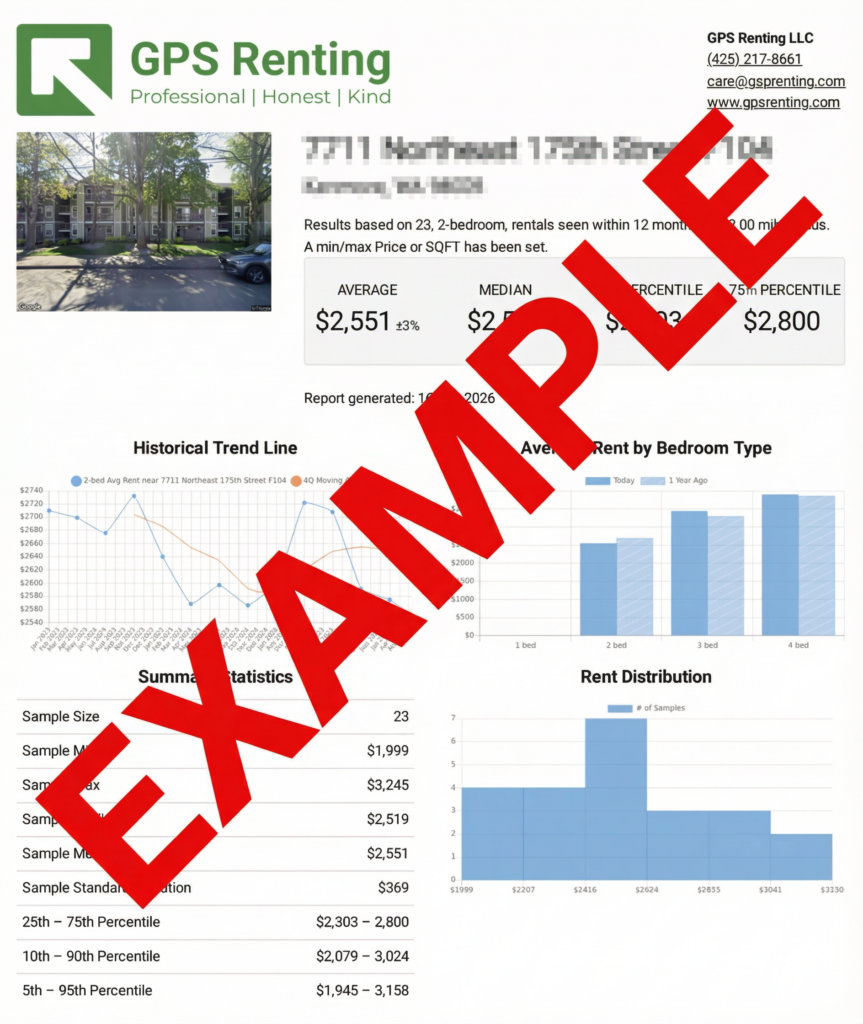
Use our True Cost Calculator to understand your property’s value and rental potential. Input your address and see:
- What your property is worth today
- What you’d net if you sold
- What you’d earn if you kept it as a rental
- How your neighborhood compares
Neighborhood-Level Rental Outlook in Issaquah
Issaquah is not one uniform rental market. Each submarket has different strengths and risks.
Central Issaquah
Central Issaquah has strong access to retail, services, redevelopment, and transit. It is also where much of the new apartment supply is concentrated.
This area can work well for apartments, condos, townhomes, and mixed-use rental properties. But landlords should watch direct competition carefully. Newer projects may influence pricing, concessions, and absorption.
Best fit: apartments, condos, townhomes, furnished mid-term rentals, and walkable rental product.
Issaquah Highlands
Issaquah Highlands remains one of the strongest rental areas because of newer housing stock, parks, schools, trails, and family appeal. It attracts professionals and families who want an Eastside lifestyle without being in Bellevue or Seattle.
The main caution is pricing. Renters here often expect quality. HOA rules, parking limitations, and association processes can also affect rental operations.
Best fit: townhomes, family rentals, executive rentals, and well-maintained condos.
Olde Town
Olde Town offers character, walkability, and a more established neighborhood feel. Renovated homes and unique rental properties can perform well because they are harder to replace with standard apartment inventory.
The risk is older housing stock. Maintenance, energy efficiency, parking, and layout issues may affect rentability if the home is not well prepared.
Best fit: renovated homes, boutique townhomes, and character rentals.
North Issaquah
North Issaquah can offer more value compared with higher-priced areas. It has access to retail and regional routes, but may not carry the same premium identity as Issaquah Highlands or Olde Town.
Best fit: value-oriented condos, townhomes, and renters who prioritize access over prestige.
Talus and SR-900 Area
Talus and nearby west-side areas offer scenic surroundings, newer attached housing, and I-90 access. These properties can appeal to tenants who want a quieter setting.
The main caution is auto dependence. Walkability and retail convenience may be more limited.
Best fit: townhomes, higher-end attached housing, and renters who value privacy and scenery.
Squak Mountain and Lower-Density Areas
Detached homes in quieter residential areas can appeal to long-term family renters. These properties may face less direct competition from new apartment supply.
The risk is maintenance. Larger homes, landscaping, hillside conditions, and older systems can increase ownership costs.
Best fit: detached homes and long-term family tenants.
What Property Types Work Best in Issaquah?
Single-Family Homes
Single-family rentals remain attractive in Issaquah because they are harder to replace with new apartment supply. Families may pay a premium for space, school access, garage parking, storage, and a quieter neighborhood.
The strongest single-family rentals usually have:
- Three or more bedrooms
- Functional layout
- Updated kitchen or bathrooms
- Garage or driveway parking
- Yard or outdoor space
- Good school access
- Clean maintenance history
The biggest risk is cost. Larger homes can carry higher property taxes, insurance, repairs, and landscaping needs.
Condominiums
Condos can work in Issaquah, especially when they are well-located and offer a lower price point than detached homes. The condo rent benchmark reviewed for this market was around $3,095, but the public sample was limited.
Investors should be careful with HOA dues, rental caps, move-in fees, special assessments, parking rules, and pet restrictions. A condo can look attractive based on rent alone but underperform after HOA and operating costs.
Townhomes
Townhomes may be one of the most practical rental products in Issaquah. They often offer more space than apartments but lower maintenance responsibility than detached homes.
They can appeal to families, relocating professionals, and renters who want a home-like experience without buying.
Apartments
Apartments have the most direct exposure to new supply. Well-located and well-managed apartment units can still perform, but older units may need sharper pricing or improvements to compete.
Owners should monitor concessions, active listings, and days on market closely.
Schedule a Consultation
Market shifts can make pricing, leasing, and tenant placement more complex than expected.
If you’d rather focus on your investment while professionals handle pricing strategy, marketing, and tenant screening, we’re here to help.

Haobang Lu
Business Development Manager
Pricing Strategy for Issaquah Landlords in 2026
The best pricing strategy in Issaquah is not simply to match the highest listing online.
A strong pricing process should consider:
- Active competing listings
- Recently leased comparable rentals
- Days on market
- Number of inquiries
- Property condition
- Seasonality
- Parking and pet policy
- School access
- HOA restrictions
- Nearby new supply
- Renewal timing
In 2026, landlords should be more willing to adjust early. Waiting too long can create a stale listing. A rental that sits for several weeks may make renters wonder what is wrong with the property.
A practical rule: if showings and inquiries are weak in the first 7 to 10 days, review pricing, photos, listing copy, and showing access immediately.
Marketing Strategy for Issaquah Rentals
Issaquah renters respond to details. A listing should not just say “great location.” It should explain why the location matters.
For family homes and townhomes, highlight:
- School access
- Bedroom count
- Garage parking
- Storage
- Yard space
- Parks and trails
- Commute routes
- Pet policy
- Lease stability
For apartments and condos, highlight:
- Walkability
- Transit access
- Retail proximity
- Package handling
- Security features
- Parking
- In-unit laundry
- Updated finishes
- Internet options
Professional photos also matter. Issaquah renters are often comparing multiple high-quality properties. Dark photos, unclear floor plans, or slow response times can reduce applications.
Should You Sell or Rent Your Issaquah Property?
For some owners, selling still makes sense. For others, renting may be the better move, especially if the home has strong rental demand and the owner does not need to sell immediately.
Consider renting if:
- You have a low mortgage rate
- The property is in a strong school or commuter location
- Rent covers a meaningful portion of carrying costs
- You want long-term appreciation exposure
- You can handle maintenance and compliance
- You are not under pressure to liquidate
Consider selling if:
- Cash flow is deeply negative
- Major repairs are coming
- HOA risk is high
- You need equity for another purpose
- You do not want landlord responsibilities
- The property is not competitive as a rental
GPS Renting has related guides on whether to sell a Seattle rental property and the difference between an accidental landlord and an intentional investor. Even though those guides focus on Seattle, the decision framework applies well to Eastside owners too.
What Issaquah Investors Should Underwrite in 2026
Investors should avoid using gross rent alone. A property can look strong at first glance but underperform once vacancy, HOA, taxes, repairs, insurance, and debt service are included.
A realistic Issaquah underwriting model should include:
- Base rent
- Expected vacancy
- Leasing timeline
- Turnover cost
- Maintenance reserve
- Property taxes
- Insurance
- HOA dues, if applicable
- Management cost
- Renewal assumptions
- Capital repairs
- Debt service
- Downside scenario
For 2026, investors should stress-test at least three cases:
Base case: Flat to low-single-digit rent growth with normal vacancy.
Downside case: One extra month of vacancy during turnover.
Expense case: Taxes, insurance, and repairs all run higher than expected in the same year.
This is especially important for new acquisitions because higher interest rates reduce the margin for error.
Practical Recommendations for Issaquah Landlords
Landlords who want to perform well in Issaquah should focus on operational control.
First, price based on current competition, not last year’s rent or a neighbor’s claim. Second, improve presentation before listing. Third, respond quickly to inquiries. Fourth, start renewal planning early because notice timing matters. Fifth, budget for taxes, maintenance, and insurance before deciding whether the rent is strong.
For many Issaquah owners, the biggest mistake is treating the property as “easy to rent” simply because the city is desirable.
Issaquah is desirable. But desirable markets still punish poor pricing, slow leasing, weak maintenance, and unclear communication.
Is Renton Still a Good Rental Market?
Yes, Renton can still be a good rental market for landlords. It has strong regional access, a wide renter base, and more affordable pricing compared to Seattle and Bellevue. It also serves renters looking for apartments, condos, townhomes, and single-family homes.
But the market is more balanced than it was during the tightest rental years. That means landlords need to be more disciplined. Strong properties can still lease well, but the market is less forgiving of overpricing, poor presentation, unclear fees, and slow communication.
For owners who want professional help, GPS Renting works with rental property owners across the Greater Seattle area, including Renton.
Price smarter before your next tenant search.
Find the right rent range for your Issaquah property.
FAQ's
What is the average rent in Issaquah in 2026?
The strongest citywide public benchmark reviewed for Issaquah shows average rent around $3,021 per month across all bedrooms and property types. Apartment-only sources were lower, while condo data showed a limited but premium point-in-time benchmark.
Is Renton rent going up or down?
Renton rents appear mostly flat to slightly down year over year, with some recent month-over-month movement. Zillow shows Renton average asking rent up month over month but slightly down year over year, while Apartments.com and RentCafe show apartment rents down year over year. The practical takeaway is that Renton is still a high-rent market, but it is no longer a market where landlords can raise prices without considering competition. Accurate pricing matters more in 2026.
Is Issaquah a good rental market for landlords?
Yes, Issaquah remains a strong rental market because of schools, household income, employer access, outdoor amenities, and Eastside demand. However, 2026 is more price-sensitive than the pandemic-era market, so landlords need accurate pricing and strong execution.
Are rents rising or falling in Issaquah?
The current data suggests Issaquah rents are broadly stable to slightly softer year over year. The market is not weak, but rent growth has cooled. Owners should not assume aggressive rent increases will be accepted without considering competition and affordability.
What types of rentals perform best in Issaquah?
Well-maintained single-family homes, townhomes, and family-oriented rentals can perform well because they offer space, school access, storage, and neighborhood quality. Condos and apartments can also work, but they may face more direct competition from new multifamily supply.
Is Issaquah better for long-term rentals or short-term rentals?
For most landlords, long-term rentals are easier to underwrite because demand is supported by families, professionals, and Eastside commuters. Short-term rental rules and tax treatment should be confirmed directly with the City of Issaquah before using STR income in an investment model.
How does new apartment supply affect Issaquah landlords?
New apartment supply may create more competition in Central Issaquah and Issaquah Highlands. Older apartments, condos, and townhomes near new developments may need better pricing, stronger photos, or upgrades to compete.
Are condos good rental investments in Issaquah?
Condos can work, but investors should be careful. HOA dues, rental restrictions, special assessments, parking rules, and pet restrictions can reduce net income. A condo should be evaluated based on net operating income, not just monthly rent.
What should landlords watch before raising rent in Issaquah?
Landlords should review current rent comps, renter affordability, lease terms, required notice timelines, and competing listings. Issaquah requires longer notice for certain rent increases, so renewal planning should begin early.
What are the biggest risks for Issaquah rental investors?
The main risks are new supply competition, higher taxes, insurance increases, maintenance costs, HOA exposure, elevated mortgage rates, and overpricing. These risks can be managed, but they should be included in the underwriting.
Should I hire a property manager for an Issaquah rental?
A property manager may be helpful if you need support with pricing, leasing, tenant screening, maintenance, renewals, notices, and compliance. In a more competitive 2026 market, operational mistakes can become expensive quickly.
Sources
This article references public market and government sources mentioned in the market review, including:
- Zillow Rental Manager Market Trends
- RentCafe Average Rent Market Trends
- Apartments.com Rent Market Trends
- Realtor.com Market Data
- U.S. Census Bureau QuickFacts
- Census Reporter
- City of Issaquah
- King County Assessor
- Freddie Mac Primary Mortgage Market Survey
- Sound Transit System Expansion
- Redfin Market Data
- Issaquah Police Department
Final Thoughts
The Issaquah rental market 2026 is still attractive for landlords and investors, but it requires better planning than it did a few years ago.
Strong schools, high incomes, employer access, and lifestyle appeal continue to support rental demand. At the same time, new supply, affordability pressure, higher ownership costs, and regulatory timing make pricing and operations more important.
For Issaquah landlords, the winning strategy is not simply asking for the highest possible rent. It is pricing correctly, preparing the property well, screening carefully, managing renewals early, and protecting long-term net income.

Written by Nick He, Founder of GPS Renting
Nick He founded GPS Renting with the mission of providing professional, honest, and kind property management throughout the Greater Seattle area, including Issaquah and nearby Eastside communities. Through years of working directly with local landlords and residents, Nick has developed extensive experience in rental pricing, tenant communication, lease compliance, maintenance coordination, and Washington landlord-tenant regulations.
His rental market guides are designed to help property owners understand local market conditions, reduce vacancy risk, price their rentals more accurately, and make better long-term decisions based on real-world property management experience. For Issaquah landlords, Nick’s insights focus on the practical challenges of managing rental homes in a premium Eastside market, from neighborhood-level pricing differences to new apartment supply, renter expectations, lease timing, maintenance costs, HOA considerations, and long-term property performance.