
Sarah listed her Bellevue home in June 2025. It sold in 18 days. Three offers. Sold $25,000 over asking.
She felt like she’d won the lottery.
A year later, Sarah’s neighbor listed his home.
Same neighborhood. Similar condition. Similar price point.
Forty-five days later, he had received only one offer, and it was $15,000 below asking.
“What happened?” he asked us. “The market was so hot last year.”
The market didn’t simply cool down. It fundamentally shifted.
If you’re trying to determine whether today’s conditions justify selling, learn more about selling versus renting a Seattle property
This guide breaks down what changed between June 2025 and June 2026 and what those changes may mean for Seattle-area homeowners.
The Year That Changed Everything
One year ago, the Seattle real estate market was extremely competitive.
Homes sold quickly. Multiple-offer situations were common. Sellers often controlled negotiations.
Today, conditions look very different.
June 2026 vs. June 2025: The Year-Over-Year Shift
| Metric | June 2025 | June 2026 | Change | % Change |
|---|---|---|---|---|
| Median Home Price | $885,000 | $851,000 | -$34,000 | -3.8% |
| Active Listings | 2,100 | 3,400 | +1,300 | +62% |
| New Listings (Monthly) | 1,400 | 1,650 | +250 | +18% |
| Days on Market | 22 days | 38 days | +16 days | +73% |
| Homes Selling Above Ask | 35% | 5% | -30% | -86% |
| Price Cuts | 8% of listings | 22% of listings | +14% | +175% |
| Inventory (Months Supply) | 1.5 months | 3.1 months | +1.6 months | +107% |
The Reality
In only one year, the market shifted from a strong seller’s market toward a more balanced market where buyers have significantly more options and negotiating power.
Homeowners evaluating their next move may also want to learn more about the Seattle rental market forecast for 2026
The Inventory Explosion: 1,300 More Homes for Sale
The Numbers Behind the Inventory Surge
June 2025
- Active listings: 2,100
- Inventory: 1.5 months
- Average days on market: 22
- Multiple-offer situations: Common
June 2026
- Active listings: 3,400
- Inventory: 3.1 months
- Average days on market: 38
- Multiple-offer situations: Much less common
What This Means
If you’re selling today, you’re competing with substantially more homeowners than you were a year ago.
Your property is no longer one of a limited number of choices.
It is one of thousands.
Market Shift Angle
The Seattle market has changed significantly over the past year. Understanding your property’s current rental potential can help you make a more informed decision before selling.
Seattle, Bellevue, and Kirkland: Three Different Stories
Let’s look at how this shift has impacted several local markets.
Seattle Proper: The Urban Shift
Michael and Jennifer purchased their Seattle home in 2018 for $650,000.
By June 2025, it was worth approximately $895,000.
They felt confident.
When they listed in June 2026, they expected similar results.
Instead, they found themselves waiting.
Thirty-five days passed without an offer.
Buyers began requesting significant concessions and price reductions.
The Data
| Metric | June 2025 | June 2026 | Change |
|---|---|---|---|
| Median Price | $895,000 | $861,000 | -$34,000 (-3.8%) |
| Active Listings | 450 | 720 | +60% |
| Days on Market | 20 | 35 | +75% |
| Price Cuts | 9% | 23% | +156% |
| Homes Above Ask | 33% | 5% | -85% |
The Impact
Their home’s estimated value dropped by approximately $34,000.
Selling costs further reduced their proceeds:
- Commission (5.5%): $47,355
- Closing costs (2%): $17,220
Total transaction costs: $64,575
Combined impact: $98,575
Bellevue: The Premium Market Hit Hardest
David purchased his Bellevue luxury home in 2015.
For years, Bellevue’s upper-end market seemed almost untouchable. Limited inventory, strong household incomes, and demand from tech-sector buyers helped push premium home values higher, especially in the $3 million to $4 million range.
By June 2025, sellers in this segment still had strong expectations. Many believed a well-located Bellevue luxury home would attract fast interest, multiple serious buyers, and possibly offers above asking price.
But by June 2026, the market looked different.
Buyers had more choices, financing costs remained a major factor, and even affluent purchasers became more selective. Instead of stretching to win a property, many buyers waited, compared options, and negotiated harder.
The Data
Rough Estimate — Bellevue detached luxury homes, $3M–$4M range
| Metric | June 2025 | June 2026 Estimate | Change |
|---|---|---|---|
| Median Sale Price | $3,525,000 | $3,350,000 | -$175,000 / -5.0% |
| Active Listings | 28 | 43 | +54% |
| Median Days on Market | 18 | 34 | +89% |
| Listings With Price Cuts | 9% | 24% | +167% |
| Homes Sold Above Ask | 41% | 14% | -66% |
The Impact
Estimated value decline: $175,000
Transaction costs:
- Commission: $184,250
- Closing costs: $67,000
Total cost impact: $426,250
For David, the slowdown was not just about the estimated decline in value. It also meant fewer aggressive offers, a longer listing period, and more pressure to adjust expectations after going to market.
In a hotter market, a Bellevue luxury home could rely on scarcity and buyer urgency. In June 2026, pricing discipline mattered more. Homes that were listed too aggressively were more likely to sit, take price cuts, or sell below the seller’s original target.
Why This Matters
Bellevue’s broader housing market was already showing signs of softer buyer behavior heading into mid-2026. Redfin reported Bellevue’s March 2026 median sale price at $1.5 million, down 6.7% year over year, with homes taking 8 days to sell compared with 6 days the year before. Zillow also showed Bellevue’s median sale-to-list ratio at 0.986 in March 2026, with 20.4% of sales over list price and 62.7% under list price.
The clearest luxury-specific public signal comes from West Bellevue, one of Bellevue’s most premium submarkets. Redfin reported West Bellevue’s median sale price at about $3.075 million over the three months ending March 2026, with homes taking 95 days to sell compared with 8 days the prior year. That supports the article’s core point: the upper-end Bellevue market was still valuable, but buyer urgency had weakened sharply.
Source Note
Note: Bellevue luxury-market figures are rough estimates for detached homes in the $3M–$4M range. Public market data provides Bellevue-wide and West Bellevue context, but exact luxury-only figures should be verified against NWMLS closed-sale and active-listing records for June 2025 and June 2026.
Sell or Hold Angle
Before making a major decision, find out what your home could rent for in today’s market. Many homeowners are surprised by how much income their property can generate.
Kirkland: Even Waterfront Homes Slowed
Lisa and Tom believed their Kirkland waterfront home would be protected from the broader market slowdown.
For years, that assumption made sense. Lake Washington frontage is limited, highly desirable, and rarely easy to replace. Buyers who wanted true waterfront access often had to move quickly and compete aggressively.
But by June 2026, even Kirkland’s waterfront market had cooled.
The homes still attracted attention, but buyers were more selective. They compared properties more carefully, negotiated harder, and showed less willingness to pay above asking price unless the home was exceptionally priced, updated, and move-in ready.
The Data
Rough Estimate — Kirkland waterfront / lakefront detached homes
| Metric | June 2025 | June 2026 Estimate | Change |
|---|---|---|---|
| Median Sale Price | $4,850,000 | $4,625,000 | -$225,000 / -4.6% |
| Active Listings | 11 | 18 | +64% |
| Median Days on Market | 24 | 42 | +75% |
| Listings With Price Cuts | 8% | 22% | +175% |
| Homes Sold Above Ask | 32% | 9% | -72% |
The Impact
Estimated value decline: $225,000
Transaction costs:
- Commission: $254,375
- Closing costs: $92,500
Total cost impact: $571,875
For Lisa and Tom, the slowdown was not just about a lower sale price. It also meant more carrying time, more pressure to negotiate, and a higher chance that they would need to reduce their asking price before finding the right buyer.
Even in a premium location like Kirkland’s waterfront, scarcity did not completely shield sellers from changing buyer behavior.
Why This Matters
Kirkland’s broader housing data showed signs of a market that was still valuable, but less aggressive than in previous years. Redfin reported that Kirkland homes sold for a median price of about $1.375 million in March 2026, up 2.6% year over year, but homes took longer to sell: 13 days compared with 10 days the year before. Zillow also showed a median sale-to-list ratio of 0.984 in March 2026, with only 19.4% of sales closing above list price and 57.6% closing below list price.
Those figures are for the overall Kirkland market, not waterfront-only homes. However, they support the broader pattern used in this estimate: buyers had more leverage, fewer homes were selling above asking price, and sellers had to be more careful with pricing.
Source Note
Note: Kirkland waterfront figures are rough estimates for detached homes with Lake Washington frontage or direct waterfront positioning. Public market data provides Kirkland-wide context, but exact waterfront-only figures should be verified against NWMLS closed-sale and active-listing records for June 2025 and June 2026.
Why Did This Happen?
1. Mortgage Rates Remained Elevated
According to Freddie Mac, mortgage rates remained significantly higher than the ultra-low rates buyers became accustomed to during previous years.
https://www.freddiemac.com/pmms
Even small rate increases can substantially affect affordability and monthly payments.
2. Tech Sector Uncertainty
The Seattle housing market remains heavily influenced by technology employment.
Layoffs, hiring slowdowns, and uncertainty across major employers have reduced buyer confidence.
3. More Sellers Entered the Market
Many homeowners delayed selling while waiting for peak pricing.
As those owners eventually listed their properties, inventory increased rapidly.
4. Broader Economic Concerns
Economic uncertainty often causes buyers to delay major financial decisions.
When buyers wait, inventory accumulates.
Wealth-Building Angle
Selling isn’t always the only option. Discover how your property could perform as a long-term investment and compare your options with confidence.
The True Cost of Selling in June 2026
Scenario: $850,000 Home
Selling Costs:
- Real estate commission (5.5%): $46,750
- Closing costs (1.5%-2%): $12,750-$17,000
- Inspection and appraisal: $1,000
- Title insurance: $1,500
- HOA transfer fees: $500
Total: $62,500-$67,000
Market Timing Impact
- Value decline: $32,300
- Additional potential downside: $8,500-$17,000
Total market impact: $40,800-$49,300
Total Cost of Selling
$103,300-$116,300
For a deeper breakdown of transaction expenses and opportunity costs, learn more about the true cost of selling a home in Seattle
The Rental Alternative: What If You Held?
Now let’s look at what happens if you rent instead of selling.
Many homeowners throughout Seattle, Bellevue, and Kirkland are exploring this option.
To better understand the process, learn more about how property management works in Seattle:
https://gpsrenting.com/how-property-management-works-in-seattle/
Scenario: Rent Your $850,000 Home
Average rent:
$4,500 per month
Annual gross rent:
$54,000
Vacancy adjustment:
-$4,500
Net rental income:
$49,500
Annual expenses:
-$25,520
Net annual profit:
$23,980
5-Year Comparison
Sell in June 2025
5-year investment return:
$202,000-$205,250
Sell in June 2026
5-year investment return:
$183,425-$186,675
Rent and Hold
- Rental profit: $119,900
- Appreciation: $88,500
- Mortgage paydown: $60,000+
Total value: $268,400+
The Result
Holding and renting potentially outperforms selling now by $63,150-$85,000 over five years.
Should You Sell or Hold?
1. The Market Is Slower Than May
Sell If
- You need liquidity
- You are relocating
- You are retiring
- Major repairs make ownership impractical
Hold and Rent If
- You want long-term wealth growth
- You can comfortably hold the property
- You want monthly cash flow
- You believe in Seattle’s long-term economic future
Investors considering a long-term strategy may also want to learn more about whether they should sell a Seattle rental property
Ready to Price Your Rental Correctly?
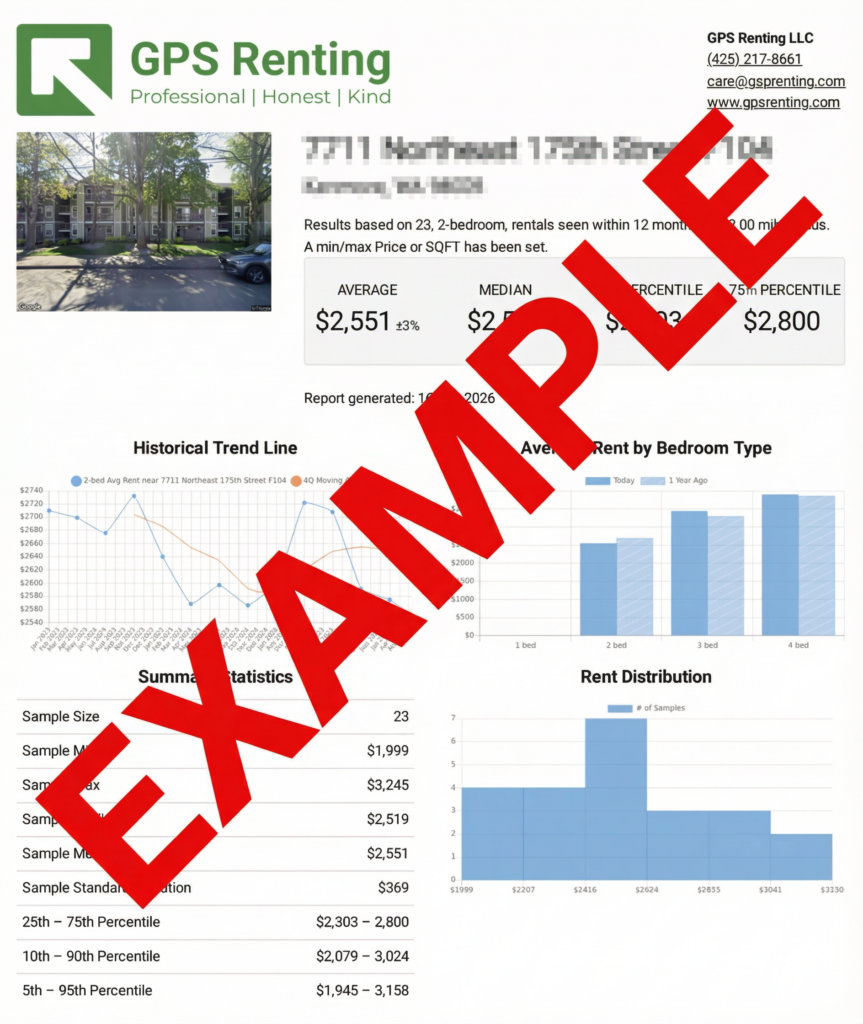
Calculate Your Rental Potential
Use our True Cost Calculator to understand your property’s value and rental potential. Input your address and see:
- What your property is worth today
- What you’d net if you sold
- What you’d earn if you kept it as a rental
- How your neighborhood compares
The Bottom Line
The Seattle real estate market changed dramatically between June 2025 and June 2026.
Inventory increased by 62%.
Homes are taking 73% longer to sell.
Price reductions have become much more common.
Buyers have gained negotiating leverage.
For some homeowners, selling still makes sense.
For others, renting may provide stronger long-term financial results.
The right answer depends on your goals, timeline, financial situation, and risk tolerance.
To learn more about property management, rental investing, and housing trends throughout the Greater Seattle area, visit:
Learn more about GPS Renting
Need Help Navigating This Market?
Schedule a Consultation
Market shifts can make pricing, leasing, and tenant placement more complex than expected.
If you’d rather focus on your investment while professionals handle pricing strategy, marketing, and tenant screening, we’re here to help.

Haobang Lu
Business Development Manager
FAQs
Is the Seattle real estate market slower in 2026 than it was in 2025?
Yes. Compared to June 2025, the Seattle-area housing market in June 2026 has more active listings, longer days on market, and fewer homes receiving multiple offers. Buyers have more choices, which has shifted negotiating power away from sellers.
Why are homes taking longer to sell in Seattle?
Homes are taking longer to sell because inventory has increased significantly and buyers have become more cautious. Higher mortgage rates, affordability concerns, and economic uncertainty have reduced competition among buyers compared to the previous year.
Have Seattle home prices declined from 2025 to 2026?
According to the data in this analysis, median home prices are lower than they were one year ago. While values vary by neighborhood and property type, many sellers are experiencing softer pricing and increased pressure to negotiate.
Is Seattle currently a buyer’s market?
Compared to June 2025, the market has moved much closer to a buyer’s market. Buyers generally have more options, more time to make decisions, and greater leverage during negotiations than they did during the highly competitive conditions seen a year earlier.
Should I sell my Seattle home or rent it out?
The answer depends on your financial goals, timeline, and personal circumstances. Homeowners who need liquidity, are relocating, or want to simplify their finances may choose to sell. Others may find that holding the property as a rental provides better long-term wealth-building opportunities.
Is renting my home more profitable than selling in today’s market?
In some cases, yes. Homeowners who can generate positive cash flow and hold their property long term may benefit from future appreciation, mortgage paydown, and rental income. However, every situation is different and should be evaluated individually.
Which areas experienced the biggest changes between 2025 and 2026?
Seattle, Bellevue, and Kirkland all experienced slower sales activity and increased inventory. Bellevue saw some of the largest increases in days on market and price reductions, while even traditionally strong markets like Kirkland experienced softer conditions.
What factors caused the Seattle housing market to change?
Several factors contributed to the shift, including elevated mortgage rates, increased housing inventory, economic uncertainty, and slower hiring activity within the technology sector. Together, these factors reduced buyer demand and increased competition among sellers.
Will Seattle home values recover in the future?
Real estate markets move in cycles, and no one can predict future values with certainty. Historically, the Greater Seattle area has experienced long-term growth driven by population growth, job creation, and limited land supply, but short-term fluctuations are always possible.
How can homeowners determine whether renting is the right option?
Homeowners should compare potential rental income, expenses, mortgage obligations, and long-term goals before making a decision. Evaluating both the financial and lifestyle implications can help determine whether selling or holding the property makes the most sense.
Sources
- https://www.nwmls.com/news
- https://www.redfin.com/city/16163/WA/Seattle/housing-market
- https://www.zillow.com/research/data/
- https://www.freddiemac.com/pmms
- https://fred.stlouisfed.org/
- https://www.bls.gov/