
Seattle is one of the most regulated rental markets in the country. For landlords, understanding the difference between normal wear and tear and tenant-caused property damage is not just a maintenance issue. It directly affects security deposit deductions, documentation requirements, dispute risk, and legal compliance.
In our experience at GPS Renting, this is one of the most common areas where landlords make costly mistakes. Owners often assume that any deterioration found at move out can be charged to the tenant. In Seattle, that assumption can create serious problems if the damage is not clearly documented and if the condition goes beyond what the law considers ordinary use.
According to the Revised Code of Washington RCW 59.18.260, landlords may only withhold from a tenant’s deposit for damage beyond normal wear and tear, and only when proper move-in documentation requirements have been satisfied. Based on Seattle’s Rental Registration and Inspection Ordinance (RRIO), landlords also operate in a city environment that emphasizes habitability standards, documentation, and consistent property condition oversight.
As tenants become more familiar with their rights, disputes over deposits and move-out charges are becoming more common. The landlords who handle these situations best are the ones who rely on detailed inspections, strong records, photo evidence, and consistent processes.
Are You Handling Wear and Tear Correctly?
Avoid costly deposit mistakes by understanding what you can and cannot charge tenants for.
Key Takeaway
Normal wear and tear is the expected, gradual aging of a rental property caused by ordinary daily living. Landlords must absorb those costs as part of owning and maintaining the home. Property damage goes beyond ordinary use and is caused by negligence, misuse, carelessness, or unauthorized alterations. That type of damage may be charged to the tenant when it is properly documented and legally accounted for.
For Seattle landlords, the difference matters because it affects deposit deductions, repair responsibilities, compliance risk, and long-term property value.
What Is Normal Wear and Tear?
Normal wear and tear refers to the unavoidable deterioration that happens when a tenant lives in a property as intended. Even responsible tenants will create some level of aging over time. Paint fades, carpet paths become visible, cabinet hardware loosens, and flooring loses some of its finish. These changes are expected and are not considered tenant fault.
According to Seattle guidance on tenant and landlord responsibilities and standard housing expectations, routine aging is part of normal occupancy and cannot be treated as chargeable damage simply because the home no longer looks brand new. Based on common industry standards and Seattle-area property management guidance, wear and tear usually includes cosmetic decline rather than destructive or negligent harm.
Common Examples of Normal Wear and Tear
| Area | Normal Wear and Tear |
|---|---|
| Walls and Paint | Minor scuffs, faded paint, a few small nail holes |
| Flooring | Light carpet wear in traffic areas, minor hardwood scuffing |
| Fixtures | Loose handles, slightly worn cabinet hinges, aging hardware |
| Bathrooms | Faded grout, soap residue, light surface wear on tubs or sinks |
| Doors and Windows | Minor sticking, small alignment changes from age and use |
| Appliances | Normal aging of components, worn seals, minor cosmetic wear |
A landlord generally cannot charge a tenant because a carpet has aged naturally, paint has dulled over time, or hardware has loosened through regular use.
What Is Considered Property Damage?
Property damage is deterioration that goes beyond ordinary use. It is typically caused by negligence, abuse, misuse, unauthorized changes, or failure to report a problem before it worsens. Unlike normal wear and tear, this type of damage may be deducted from the security deposit if the landlord has the required documentation and follows Washington’s deposit rules.
According to Washington’s Attorney General landlord-tenant resources, landlords should be prepared to distinguish between normal aging and tenant-caused harm when calculating deductions. Based on Seattle and Washington deposit standards, the stronger the documentation, the more defensible the deduction becomes.
Not Sure What You Can Charge Tenants For?
Get expert guidance on wear and tear, damage, and Seattle compliance.
Common Examples of Tenant-Caused Damage
| Area | Tenant-Caused Damage |
|---|---|
| Walls | Large holes, broken drywall, dents, unauthorized paint colors |
| Flooring | Pet urine stains, deep gouges, heavy burns, large permanent stains |
| Appliances | Broken shelves, cracked glass, misuse-related failure |
| Plumbing | Clogs caused by improper use, broken fixtures, overflow damage |
| Windows and Doors | Broken glass, torn screens, forced locks, damaged frames |
| General Interior | Missing fixtures, broken blinds, neglected moisture damage |
If a tenant causes severe damage to flooring, breaks a window, or leaves behind significant filth requiring extraordinary cleaning, those costs may be chargeable. But those charges should never be based on assumption alone.
Why the Difference Matters So Much in Seattle
Seattle landlords face a higher compliance burden than many other markets. The issue is not only whether damage exists. The issue is whether the landlord can prove the condition, show that it exceeds ordinary use, and apply the charge in a legally defensible way.
1. Security deposit deductions are tightly regulated
According to RCW 59.18.260, landlords must follow specific rules tied to written checklists and condition reporting when collecting and later claiming against a deposit. If the move-in condition is not clearly documented, deposit deductions can become much harder to enforce.
2. Item lifespan matters
Landlords cannot usually charge a tenant the full replacement cost of an item that was already nearing the end of its useful life. For example, if older carpet already had years of wear, a landlord may not be able to justify charging the full cost of brand-new replacement. In practice, age, expected lifespan, and actual condition all matter when determining fair deductions.
3. Documentation is everything
Move-in photos, written condition reports, mid-lease inspections, and move-out comparisons can make the difference between a straightforward resolution and a prolonged dispute. Without documentation, even legitimate claims may be weakened.
4. Cleaning is not the same as damage
A unit should be returned in substantially similar cleanliness to the condition at move in, but landlords should be careful not to confuse routine turnover cleaning with tenant-caused extraordinary mess or neglect. Charging for standard turnover cleaning when the home was returned reasonably clean can trigger avoidable disputes.
Real World Seattle Examples
To better understand the distinction, here are practical examples we often use with owners.
Usually normal wear and tear
A tenant lives in a home for three years. The living room paint is faded, there are a few minor scuff marks near the hallway, and the carpet shows flattened paths where people walked most often. These are expected signs of occupancy and are normally a landlord expense.
Usually chargeable damage
A tenant leaves behind large wall anchors, several fist-sized drywall holes, pet urine saturation in a bedroom carpet, and a cracked oven door caused by impact. These conditions go beyond normal living and are typically considered tenant-caused damage.
Situations that require judgment
A scratched hardwood floor may be normal or chargeable depending on depth, location, severity, and length of tenancy. A stained carpet may be wear if it is old and lightly discolored, or damage if the stains are severe, recent, and prevent ordinary use. These gray areas are why photos, timelines, and professional inspection notes matter.
Ready to Price Your Rental Correctly?
Calculate Your Rental Potential
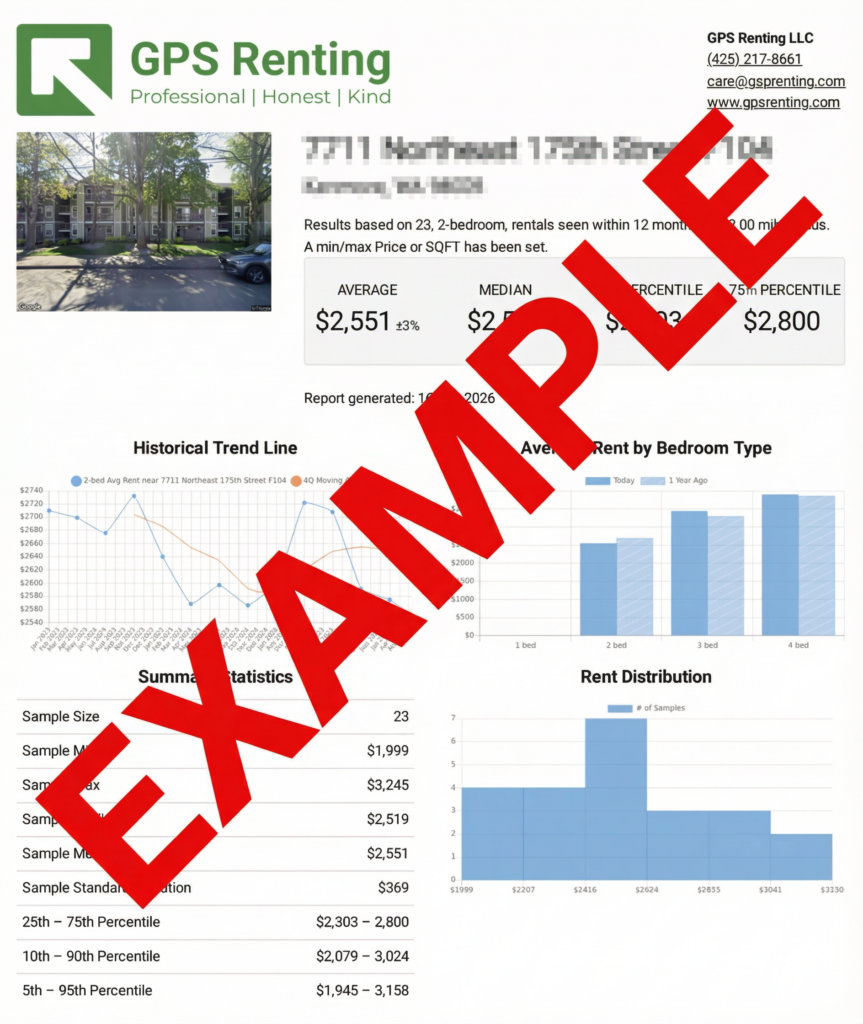
Use our True Cost Calculator to understand your property’s value and rental potential. Input your address and see:
- What your property is worth today
- What you’d net if you sold
- What you’d earn if you kept it as a rental
- How your neighborhood compares
How GPS Renting Handles Wear and Tear vs. Damage
At GPS Renting, we take a process-driven approach because subjective judgment alone is not enough in Seattle’s regulatory environment. Our goal is to protect the owner, remain compliant, and reduce unnecessary friction with residents.
Our approach includes:
- High-resolution, timestamped move-in documentation
- Written condition reporting tied to the property’s actual starting condition
- Periodic inspections to identify developing issues before they become major damage
- Move-out comparisons using side-by-side notes and photos
- Legally compliant deposit accounting and communication
- Clear tenant communication to reduce confusion and prevent escalation
This kind of documentation protects everyone involved. Owners get a more defensible record. Tenants get transparency. Disputes become easier to resolve because the conversation is based on evidence rather than memory.
Common Disputes and How to Prevent Them
| Common Issue | Why It Happens | Best Prevention |
|---|---|---|
| Tenant says the damage was already there | Weak or incomplete move-in records | Signed checklist and detailed photos at move in |
| Owner wants to charge for repainting | Paint deterioration is often normal wear | Track tenancy length and actual wall condition |
| Pet-related damage is disputed | Odors and stains are hard to prove later | Strong pet policy, inspection records, clear photos |
| Water damage worsens during tenancy | Small leaks go unreported | Fast maintenance response and periodic inspections |
| Cleaning charges are challenged | Standard cleaning and deep neglect get mixed together | Document pre and post condition carefully |
Best Practices for Seattle Landlords in 2026
The landlords who handle deposit deductions well usually follow a few consistent habits.
- Use a thorough move-in condition report
A written and signed move-in checklist remains one of the strongest protections available to a landlord. Every room, surface, appliance, and fixture should be documented in practical detail. - Take clear photos and video
Time-stamped visual evidence makes a major difference. Wide-angle room shots are helpful, but close-up images of walls, flooring, appliances, and high-risk areas are even more valuable. - Inspect during the tenancy
A mid-lease inspection can help identify unauthorized pets, moisture issues, plumbing misuse, or maintenance neglect before the problem becomes more serious. - Be realistic about lifespan
Paint, carpet, caulking, and appliances all age. A fair assessment considers use, age, and expected life rather than treating every defect as billable damage. - Keep communication professional
The most successful landlords do not make deposit disputes emotional. They provide evidence, explain the reasoning clearly, and follow the law consistently.
Protect Your Rental Property With Expert Management
Schedule a Consultation
GPS Renting helps Seattle landlords reduce disputes, protect deposits correctly, and maintain their rental homes with professional, honest, and kind service.

Frequently Asked Questions
- Who decides what counts as wear and tear?
In practice, the standard is based on what a reasonable person would expect from ordinary use over time. Courts and dispute processes often look at the length of tenancy, the original condition, the age of the item, and whether the issue appears accidental, negligent, or simply part of normal aging.
- Can a landlord charge for cleaning in Seattle?
Yes, but usually only when the cleaning goes beyond ordinary use and normal turnover expectations. Routine dust, light debris, or ordinary housekeeping differences are not the same as excessive filth, heavy buildup, or neglect-related cleanup.
- Can a landlord charge full replacement cost for old carpet or old paint?
Not always. If the item was already aged or nearing the end of its useful life, charging the full cost of brand-new replacement may not be reasonable. Fair deductions should take condition and remaining useful value into account.
- What if a tenant disputes the deduction?
The landlord should provide the written condition report, supporting photos, repair invoices, and a clear explanation of why the issue exceeds normal wear and tear. Strong records are usually the deciding factor.
- How often should a rental property be inspected?
For most Seattle rentals, at least one periodic inspection during the lease term, in addition to move-in and move-out documentation, is a strong best practice. More frequent review may be appropriate for higher-risk properties or maintenance-sensitive homes.
Final Thoughts
For Seattle landlords in 2026, understanding wear and tear versus property damage is no longer just a basic property management concept. It is a compliance issue, a financial issue, and a relationship issue.
Normal wear and tear is part of owning rental property. Damage caused by misuse or neglect may be chargeable, but only when the landlord has the documentation and legal process to support that claim. In a highly regulated market like Seattle, the landlords who stay organized and evidence-based are the ones best positioned to avoid disputes and protect long-term property value.
GPS Renting helps landlords stay compliant through structured inspections, detailed documentation, transparent communication, and professional property oversight designed for Seattle’s rental environment.
Related Articles

Written by Nick He, Founder of GPS Renting
Nick He founded GPS Renting with the mission of delivering professional, honest, and kind property management across the Greater Seattle area. With deep expertise in regional rental trends, market analytics, and Washington housing regulations, Nick provides data-driven insights that help landlords and investors make informed decisions in one of the most complex rental markets in the country. His monthly market updates are trusted by Seattle-area owners who rely on accurate forecasting, clear analysis, and grounded operational experience to stay ahead of market shifts.