
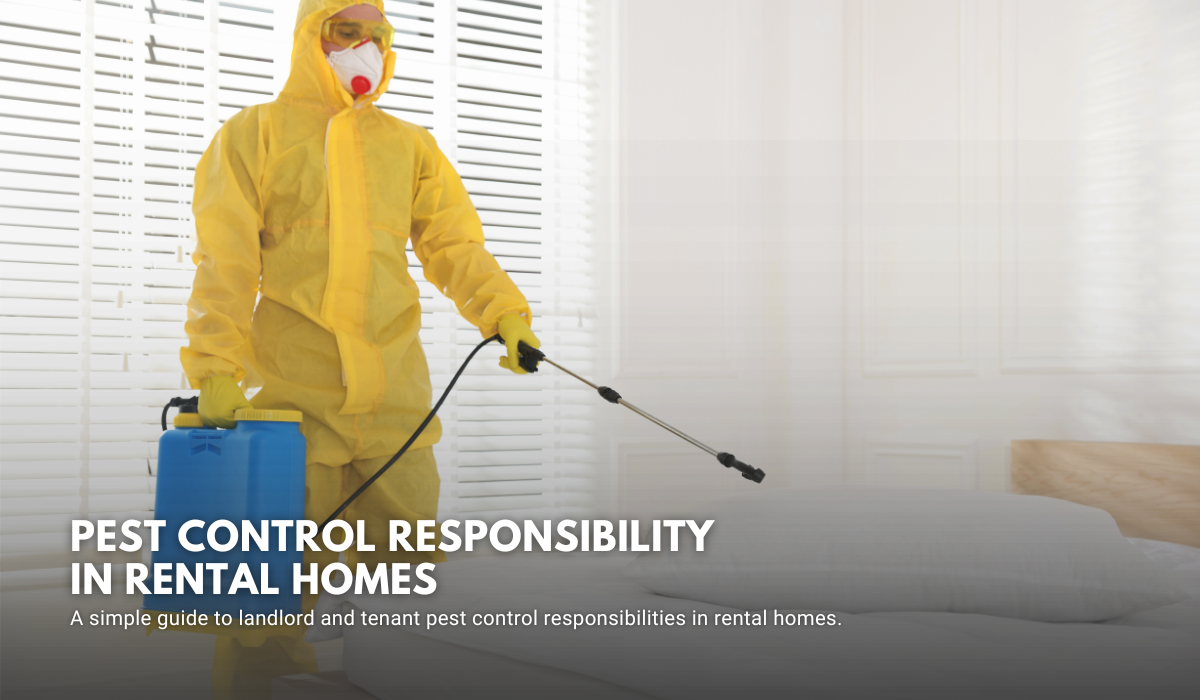
Pest disputes are extremely common in rental housing. Understanding pest control responsibility helps landlords and tenants resolve infestations quickly while maintaining safe and habitable living conditions.
In Seattle and across Washington State, landlords must generally provide rental housing that is safe, sanitary, and fit for occupancy at the start of a tenancy. At the same time, tenants must maintain reasonable cleanliness and report problems promptly.
When pest issues arise, responsibility usually depends on what caused the infestation and how quickly it was reported.
Key Takeaway
Pest control responsibility in rental housing depends largely on what caused the infestation. Landlords are responsible for providing a habitable property and fixing structural issues that allow pests to enter. Tenants are responsible for maintaining cleanliness and reporting infestations promptly. Clear documentation, preventative maintenance, and early reporting help resolve pest issues quickly.
What Counts as a Habitability Issue
Certain pest infestations may affect the habitability of a rental home.
Rodents
Rodents such as rats and mice are common in older homes and dense urban neighborhoods. They can damage wiring, contaminate food, and spread disease.
According to the Seattle Department of Construction and Inspections, landlords must maintain buildings in sanitary condition and address pest infestations that affect habitability.
Rodent problems are often linked to structural entry points such as foundation gaps, wall openings, and crawlspace access.
Bed Bugs
Bed bugs can spread rapidly between units in multi family housing.
Based on guidance from the Washington State Department of Health, landlords must maintain rental housing in a condition that protects occupant health and safety, which may include addressing pest infestations affecting habitability.
In apartment buildings, treatment often requires coordinated pest management across multiple units.
Cockroaches
Cockroach infestations can result from sanitation problems or building conditions such as plumbing gaps and shared walls.
According to the Tenants Union of Washington State, landlords are typically responsible when infestations occur due to building conditions rather than tenant negligence.
In apartment buildings, treatment often requires coordinated pest management across multiple units.
Landlord Responsibility
Under Washington State law, landlords must maintain rental properties in a condition fit for human habitation.
According to Washington Law Help, landlords must take reasonable steps to eliminate infestations that threaten tenant health or safety.
Infestations Not Caused by Tenant Negligence
Landlords are usually responsible when infestations are caused by:
- pests present at move in
- infestations spreading from neighboring units
- structural building defects
- building wide pest activity

Structural Entry Points
Landlords must also repair structural conditions that allow pests to enter a property.
Common entry points include:
- cracks in foundations
- gaps around plumbing lines
- broken window seals
- poorly sealed doors
Sealing these entry points is essential because pest treatments alone may not prevent reinfestation.
For example, small air gaps and wall openings can allow pests inside. To learn more about preventing structural gaps in homes, read this guide: How To Fix Drafty Windows
Tenant Responsibility
Tenants also play an important role in preventing pest problems.
According to the Rent.com housing guide, tenants may be responsible for pest infestations caused by sanitation problems or conditions created inside the unit.
Cleanliness
Tenants must maintain basic cleanliness standards such as:
- Storing food properly
- Removing trash regularly
- Keeping kitchen surfaces clean
Poor sanitation can attract cockroaches, ants, and rodents.
Delayed Reporting
Tenants should report pest issues immediately.
Delays can allow infestations to spread and increase treatment costs.
Documentation System
Proper documentation protects both landlords and tenants when pest issues arise.
Written Maintenance Request
Tenants should submit pest complaints through a written maintenance request system.
To learn more about how maintenance requests are tracked, read this guide: How to make a payment in our property management system
Vendor Inspection
Professional pest control companies typically provide reports that identify the type of pest and likely causes.
Photos
Photos can help document the severity of the infestation and when it was discovered.
Pest Addendum
Many lease agreements include pest cooperation clauses.
You can review a sample pest control cooperation agreement provided by the Seattle Housing Authority here: Pest Addendum.pdf
Prevention Tips
Preventing pest infestations is often easier than resolving them.
Seal cracks and openings
Small wall openings and structural gaps can allow pests to enter.
To learn more about repairing common wall damage, see this guide: How to repair doorknob hole in wall
Manage trash properly
Garbage should be sealed and removed regularly to prevent attracting rodents.
Control moisture
Damp environments attract many pests.
To learn more about identifying moisture problems in homes, read this guide:How to fix ceiling water stains: a practical guide for Seattle homes
Need Help Managing Rental Property Issues?
Pest problems, maintenance coordination, and habitability compliance are common challenges for landlords. Having a structured management system can help prevent disputes and protect both owners and tenants.
At GPS Renting, we help rental property owners handle maintenance coordination, vendor inspections, and property compliance so issues like pest infestations are addressed quickly and professionally.
If you want help managing your rental property more efficiently, talk to our property management experts and learn more
Call: (425) 217 8661
Email: care@gpsrenting.com
Website: https://gpsrenting.com/