
Every Pod at GPS Renting operates like its own ecosystem — where owners, residents, and team members rely on clear communication, consistent decisions, and timely execution. Leading that ecosystem requires more than operational knowledge. It requires patience, structure, and the ability to stay steady when situations become complex.
As Seattle Pod Leader, Anna Le oversees one of the most regulation-heavy and fast-moving rental markets in Washington. Her role centers on guiding her team through owner relationships, resident escalations, leasing decisions, renewals, and maintenance coordination — all while ensuring alignment with GPS Renting’s policies and values.
This article highlights the leadership responsibilities of the Seattle Pod Leader through a series of focused questions designed to capture Anna’s perspective on leadership, decision-making, and team support.
Building Strong Owner Relationships
Property owners depend on clear communication and informed guidance, especially when navigating pricing decisions, unexpected maintenance issues, or regulatory requirements. In a market like Seattle, transparency and consistency are critical to maintaining long-term trust.
How do you define success for the Seattle Pod while balancing owner expectations, resident experience, and team performance?

Success for the Seattle Pod means delivering predictable, compliant outcomes for owners, a stable and respectful experience for residents, and clear accountability for the team. I focus on alignment — ensuring owners understand the “why” behind decisions, residents receive timely and professional communication, and the team has clear priorities and support to execute consistently.
When a situation requires escalation, such as application exceptions, pricing concerns, or lease renewal approvals, how do you approach decision-making?
I approach escalations by grounding decisions in policy first, then layering in market data, risk assessment, and owner goals. My role is to provide a clear recommendation with options, outlining compliance considerations and potential trade-offs, so owners can make informed decisions while protecting the integrity of the portfolio.
How do you ensure the Seattle Pod consistently follows GPS Renting’s policies while still addressing real-world, case-by-case situations?
Consistency comes from strong frameworks. Policies set the baseline, and exceptions are handled intentionally — documented, reviewed, and communicated clearly. This allows flexibility without creating precedent drift, ensuring fairness across owners and residents while maintaining compliance.
Driving Pod Performance with KPIs
Performance metrics help measure how well a Pod is functioning — from leasing timelines and maintenance response times to renewal execution and resident satisfaction. When used correctly, KPIs become tools for clarity rather than pressure.
When performance metrics dip or goals are missed, how do you keep the team motivated while maintaining accountability?
Focus on diagnosing the root cause — whether it’s workload balance, unclear expectations, or process gaps — before addressing performance. Accountability is paired with coaching and clear next steps, so the team understands how to improve rather than feeling reactive or discouraged.
Managing Resident Escalations with Balance
Resident concerns can escalate quickly if not handled with empathy and structure. Seattle’s regulatory environment adds another layer of responsibility, requiring leaders to balance resident experience with owner protection and legal compliance.
How do you support your team during high-pressure moments, including resident escalations or after-hours emergencies?
During high-pressure situations, I step in to clarify priorities, remove ambiguity, and support decisive action. I make sure the team knows they’re not alone, especially during escalations, while also reinforcing calm, professional communication and adherence to process.
Evaluating Borderline Applications
Not every application fits neatly within standard screening criteria. These cases require careful review, documentation, and consistency to remain compliant while protecting owner interests.
When an application does not fully meet the screening criteria, what factors guide your approval or denial decision?
Decisions are guided by consistency, risk mitigation, and fair housing compliance. I evaluate compensating factors objectively — such as income stability or verified rental history — and ensure any exception aligns with company standards and is clearly documented.
Setting and Adjusting Rental Pricing
Pricing a rental correctly impacts vacancy, owner income, and long-term performance. Effective pricing combines market data, property condition, and timing — along with clear communication when expectations differ.
What is your process for setting or adjusting rental pricing, especially when owner expectations differ from current market data?
Pricing decisions are data-driven. I rely on recent comparable rentals, leasing velocity, and seasonal trends, then contextualize that data for owners. When expectations differ, I present a range with recommended strategies, allowing owners to choose while understanding market realities and potential impacts.
Navigating Lease Renewals and Compliance
Lease renewals require precise timing, clear communication, and full compliance with Washington State laws, including EHB 1217. Pod leadership plays a key role in ensuring renewals are handled correctly and consistently.
How do you ensure lease renewals remain compliant with Washington State requirements while keeping both owners and residents informed?
Renewals are reviewed with a compliance-first mindset, ensuring notice periods, rent adjustments, and documentation align with Washington State and Seattle regulations. Clear, proactive communication is key so both owners and residents understand timelines and expectations well in advance.
Ensuring Fair and Defensible Deposit Returns
Move-out deposit returns can be sensitive for all parties involved. Proper documentation, inspections, and communication throughout the tenancy are critical to ensuring fairness and reducing disputes.
What steps do you take to ensure move-out deposit returns are fair, well-documented, and aligned with company policy?
Ensure inspections are thorough, documentation is clear, and charges are directly tied to policy and condition standards. Transparency is critical — both internally and with residents — to reduce disputes and protect owners while maintaining fairness.
Final Reflection on Leadership
Leadership in property management extends beyond systems and workflows. It shows up in how teams are supported, how decisions are made, and how challenges are handled consistently over time.
What leadership lesson has had the biggest impact on how you lead the Seattle Pod today?
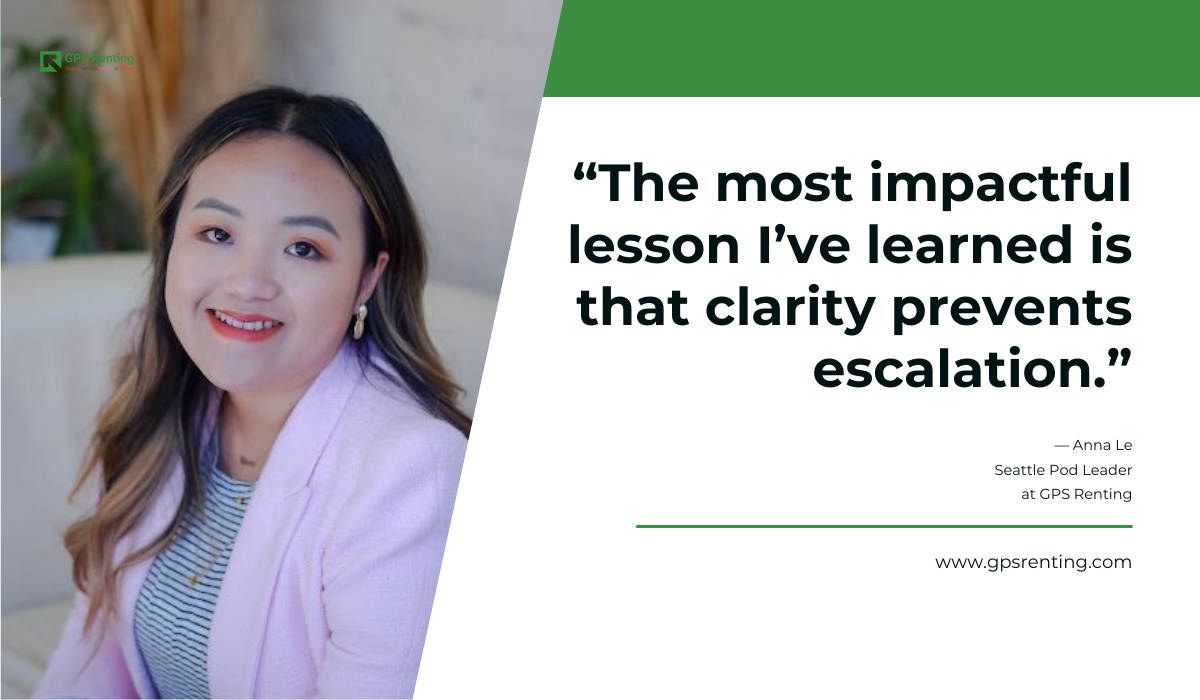
The most impactful lesson has been that clarity prevents escalation. When expectations, roles, and processes are clear, teams perform better, owners feel more confident, and residents experience fewer issues. My leadership focus is on building that clarity consistently.
Team Perspectives: Leadership in Action
Strong leadership is reflected through the people who work alongside it every day. The following questions are directed to members of the Seattle Pod team to better understand how leadership impacts their roles.
How does Anna’s leadership style support you when handling resident concerns and escalations?

Working with Anna feels like having the perfect balance of guidance and trust. She allows me to handle resident concerns, escalations, and day-to-day communication using my own judgment, which has really helped me grow and feel confident in my role. At the same time, if she notices I need support or a gentle nudge in the right direction, she’s always there to step in. It’s reassuring to know that while I have the freedom to solve problems, I also have a leader who truly has my back when challenges come up.
– Mae Navares – Resident Service Ambassador
How does Anna help ensure maintenance decisions stay aligned with company standards and owner expectations?

Anna plays a key role in keeping maintenance decisions aligned with both company standards and owner expectations. She provides leadership by setting clear expectations around maintenance standards and decision-making across the pod. She helps guide prioritization by reviewing scope, urgency, and compliance requirements, ensuring repairs align with company policies before moving forward. From a process standpoint, she reinforces consistency by confirming owner approvals when needed, validating estimates, and supporting clear communication between the team, vendors, and owners. Her oversight allows the pod to operate efficiently, make well-informed maintenance decisions, and maintain trust with owners through transparency and accountability.
– John Domo – Maintenance Coordinator
How does Anna’s guidance influence clarity and consistency within the maintenance team?
The most impactful lesson has been that clarity prevents escalation. When expectations, roles, and processes are clear, teams perform better, owners feel more confident, and residents experience fewer issues. My leadership focus is on building that clarity consistently.
– John Patrick Racaza – Assistant Maintenance Coordinator