How to Protect Rental Homes During Severe Weather Events
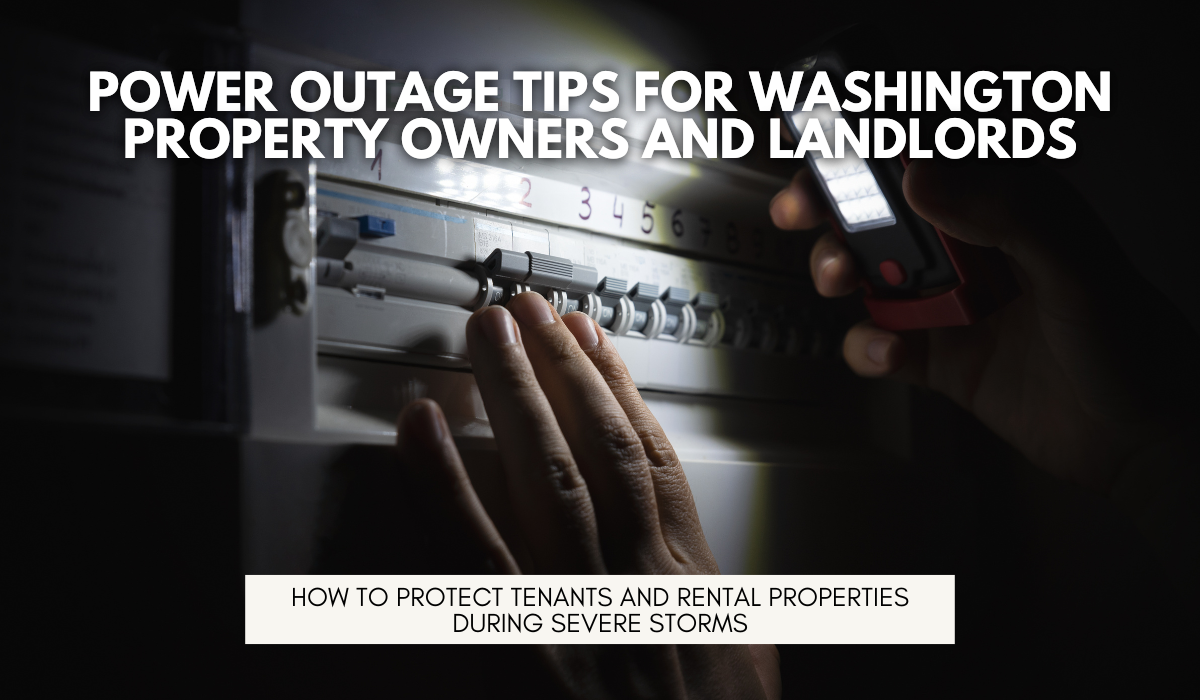
Power outages are one of the most disruptive events property owners and landlords face during Washington’s storm season. High winds, blizzard warnings, and winter weather regularly knock out electricity across Seattle, Tacoma, Snohomish County, and surrounding areas, leaving rental homes without heat, lighting, or essential systems. When outages last more than a few hours, they can quickly lead to tenant safety concerns, property damage, and legal risk.
These power outage tips for property owners and landlords explain what to do before, during, and after an outage to protect rental properties, reduce liability, and maintain habitable living conditions.
Why Power Outages Are a Serious Risk for Property Owners
Unlike owner-occupied homes, rental properties involve legal responsibilities to tenants. When power goes out, multiple systems can fail at once, creating compounding risks.
Common Problems Caused by Power Outages
Loss of heat during winter storms
Frozen or burst pipes
Sump pump failures and basement flooding
Disabled security systems or smart locks
Increased tenant stress and emergency calls
According to the National Weather Service, windstorms and winter weather are among the leading causes of prolonged power outages in Washington, often coinciding with freezing temperatures that increase property damage risk.
Source: https://www.weather.gov/safety/wind
Before the Outage: How Property Owners Should Prepare
Preparation is the most effective way to reduce emergency costs and tenant disputes.
1. Reduce Exterior Storm Risks
Property owners should regularly:
Trim trees and branches away from roofs and power lines
Clear gutters and downspouts to prevent ice buildup
Secure outdoor furniture, trash bins, and loose items
Unsecured debris and falling branches are a leading cause of storm-related property damage during high-wind events in Washington.
2. Inspect Critical Systems Ahead of Storm Season
Before winter storms arrive, landlords should ensure:
Smoke detectors with battery backup are working
Sump pumps and drainage systems are functional
Electrical panels and shared systems are in good condition
Many property owners rely on professional support, such as GPS Renting, to identify storm vulnerabilities during routine property inspections.
3. Set Clear Expectations With Tenants
Tenants should know in advance:
Which utility provider serves the property (PSE, Seattle City Light, Snohomish PUD, etc.)
Where to check official power outage maps
How updates will be shared during outages
Clear expectations reduce confusion and unnecessary emergency requests.
During a Power Outage: Best Practices for Landlords
Step 1: Confirm the Outage Is Utility-Related
Before assuming an internal electrical issue, property owners should check official utility outage maps:
Puget Sound Energy: https://www.pse.com/outage
Seattle City Light: https://www.seattle.gov/city-light/outages
Snohomish County PUD: https://www.snopud.com/outages
Tacoma Power: https://www.mytpu.org/outages
Avista: https://www.myavista.com/outages
This helps landlords avoid unnecessary electrician dispatches and provide accurate information to tenants.
Step 2: Monitor Habitability Concerns
While landlords are not responsible for outages caused by utilities, Washington law requires landlords to act reasonably once power is restored to ensure essential systems are working.
The Washington State Attorney General’s Office emphasizes that landlords must maintain safe and habitable housing conditions.
Source: https://www.atg.wa.gov/landlord-tenant
Step 3: Communicate Clearly and Calmly
Even when restoration timelines are uncertain, regular updates help prevent tenant anxiety and misinformation. Consistent communication reduces repeat maintenance requests and builds trust.
After Power Is Restored: What Property Owners Should Check
Once electricity returns, inspections should happen as soon as reasonably possible.
Post-Outage Inspection Checklist
Heating and HVAC systems are operational
Electrical panels and breakers are functioning properly
Pipes have not frozen or burst
Sump pumps and drainage systems are working
Smart locks, alarms, and thermostats are back online
According to the Insurance Information Institute, delayed inspections after outages significantly increase water and electrical damage claims.
Source: https://www.iii.org/article/power-outages-and-insurance
Power Outage Risk Management Table for Landlords
| Risk Area | Potential Impact | Recommended Action |
|---|---|---|
| Loss of Heat | Habitability concerns | Inspect HVAC immediately |
| Frozen Pipes | Water damage | Check plumbing promptly |
| Sump Pump Failure | Flooding | Test pumps after power returns |
| Security Systems | Safety risk | Verify access controls |
| Tenant Communication | Complaints and confusion | Provide regular updates |
How Professional Support Helps Property Owners During Power Outages
Power outages require coordination, documentation, and real-time decision-making. Many landlords work with experienced professionals, such as GPS Renting, to monitor outages, communicate with tenants, coordinate inspections, and manage post-storm repairs.
Learn more about professional landlord support at:
https://gpsrenting.com/
Frequently Asked Questions (FAQs)
Are landlords responsible for power outages?
- Landlords are not responsible for utility-caused outages, but they are responsible for ensuring the property is safe and systems are functional once power is restored.
Can tenants withhold rent during a power outage?
- Generally no, unless the outage results in prolonged loss of essential services and the landlord fails to respond appropriately.
How can landlords reduce outage-related damage?
- Preventive maintenance, timely inspections, clear communication, and proper documentation significantly reduce risk.
Conclusions
Power outages are unavoidable in Washington, but preventable damage and tenant frustration are not. Property owners who prepare early, rely on credible information, and take timely action are far better positioned to protect their rental homes and tenants during severe weather events.
About the Author
Nick He is the founder of GPS Renting, a residential property management company serving Seattle and the Greater Puget Sound area. With hands-on experience managing storm response, maintenance coordination, and legal compliance for Washington rental properties, Nick provides practical guidance to help landlords protect their investments and residents.