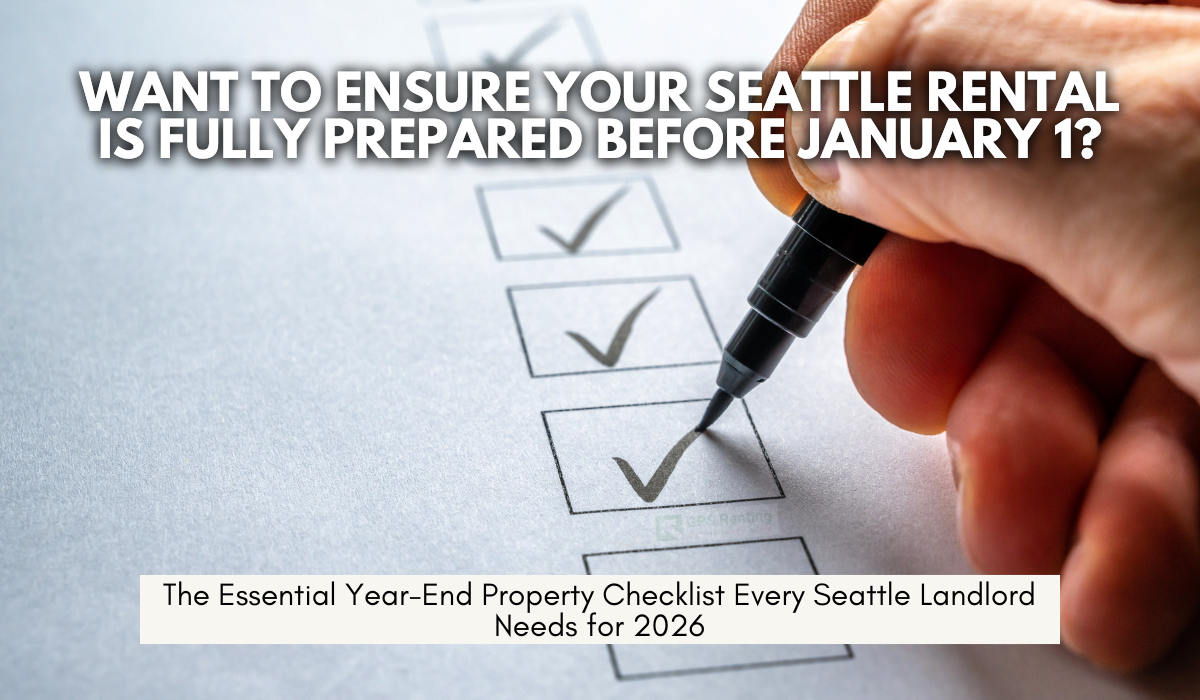
Seattle landlords year-end checklist planning is essential because entering January unprepared can lead to compliance issues, financial losses, and preventable maintenance emergencies. Seattle is one of the most regulated rental markets in the country, and the end of the year is the best time to get your properties compliant, organized, and ready for 2026. This guide outlines the must-do property, financial, and legal tasks for Seattle landlords before January 1, supported by expert insights from GPS Renting.
Summary
Seattle landlords should complete a year-end property checklist to stay compliant, protect rental income, and prepare their homes for winter risks. This includes reviewing leases, confirming legal requirements, handling maintenance, organizing documentation, and planning strategically for 2026. Professional management services such as GPS Renting can assist landlords in completing these year-end tasks efficiently and correctly.
1. Review All Leases and Expiration Dates for 2026
Running an annual audit of your leases ensures you start the new year aware of tenant timelines, renewal opportunities, and potential vacancies.
What to Check:
- Upcoming lease expirations within the next 6–12 months
- Residents eligible for renewal
- Potential non-renewals or properties you may sell
- Units operating month-to-month
- Rent adjustments needed based on Seattle market data
Why This Matters:
Seattle has strict rules tied to notices, timelines, and renter protections. Missing deadlines can lead to legal violations or lost rental income.
Learn More:
2. Check Compliance: Licenses, RRIO, and Legal Obligations
Seattle landlords must comply with both Washington State laws and additional city requirements.
Compliance Checklist (End of Year):
- Confirm landlord business licenses are active
- Verify Seattle RRIO (Rental Registration & Inspection Ordinance) registration
- Ensure all rental units meet Seattle habitability standards
- Confirm notices and addenda match updated regulations
- Review move-in inspection documentation and deposit handling procedures
Why It Matters:
Compliance penalties in Seattle can be costly, and inadequate documentation can weaken your legal standing in disputes.
Sources:
Washington State Landlord-Tenant Act: https://app.leg.wa.gov/RCW/default.aspx?cite=59.18
Seattle RRIO Program: https://www.seattle.gov/sdci/codes-and-restrictions/rrio
3. Inspect the Property and Prioritize Winter Maintenance
Winter is the most expensive season for rental property repairs in Seattle. Year-end inspections prevent emergency costs and protect renter safety.
December Maintenance Priorities:
- Furnace and heating system servicing
- Gutter and downspout cleaning
- Roof inspection for leaks or moss
- Smoke and CO detector testing
- Plumbing and pipe insulation check
- Exterior lighting and walkway safety
Learn More:
Read: Winterization Tips: How GPS Renting Protects Your Property
4. Review Property Performance and Financial Health
Understanding how each rental performed in 2025 helps you make smarter decisions in 2026.
Performance Review Table
| Category | What to Review | Why It Matters |
|---|---|---|
| Rent Collection | Total rent vs expected | Detects vacancy or payment issues |
| Operating Expenses | Repairs, utilities, vendor costs | Helps forecast 2026 CapEx |
| Vacancy | Days vacant in 2025 | Guides future pricing or marketing |
| Tenant Quality | Payment issues, communication patterns | Identify renewal strategy |
| ROI | Net income vs cash invested | Evaluates property long-term value |
5. Reassess Insurance and Risk Exposure
Seattle’s weather, dense neighborhoods, and older properties create unique risks for landlords.
End-of-Year Insurance Review:
- Liability coverage limits
- Loss-of-rent protection
- Deductibles and exclusions
- Renter’s insurance compliance
- Updates to reflect new renovations or market rent
Why It Matters:
Winter storms and water damage claims increase during December–February. Having adequate coverage reduces financial risk.
6. Organize Documents and Create a Central File System
Well-organized records are the foundation of legal defensibility and operational efficiency.
Documents to Consolidate Before January 1:
- Lease agreements and addenda
- Move-in and move-out inspection photos
- Work orders and invoices
- Tenant communication logs
- Deposit accounting and notices
- HOA and community compliance documents
Authority Insight:
Courts often rule in favor of landlords who maintain consistent documentation and follow correct procedures.
7. Plan Your 2026 Strategy: Renew, Improve, or Exit
Year-end is the best time to reassess your rental portfolio.
Strategic Questions:
- Is the property still cash flow positive?
- Do you want to upgrade, refinance, or reposition the rental in 2026?
- Is self-management costing too much time or money?
- Should you convert your home into an Airbnb or back to long-term rental?
- Would a professional property manager improve results?
Case Insight:
Many Seattle landlords discover hidden losses only after reviewing year-end maintenance and vacancy data. Professional management can significantly reduce these issues.
8. Improve Communication with Residents Going Into the New Year
Clear communication reduces friction and fosters long-term tenant satisfaction.
Year-End Messages to Send:
- Holiday office hours
- Emergency maintenance procedures
- Winter safety tips
- Preventing frozen pipes
- Upcoming inspections or property updates
Happy tenants stay longer, reducing turnover costs in 2026.
Why GPS Renting Is the Ideal Partner for Year-End Preparation
Seattle landlords who work with GPS Renting benefit from:
Compliance-First Management
- RRIO management
- Rent increase timing
- Legally compliant notices
- Updated lease templates
Proactive Maintenance
- Preventative inspections
- Winterization coordination
- High-quality vendors
Transparent Financial Reporting
- Clean year-end statements
- Income and expense summaries
- Budget planning for 2026
Local Market Expertise
- Serving Seattle, Kenmore, Bellevue, Redmond, and surrounding areas
- Understanding hyper-local market rent trends
- Expert pricing and marketing guidance
Stress-Free Communication
- Resident portal
- Owner portal
- Streamlined documentation
- Fast response time
GPS Renting helps landlords begin January fully prepared, compliant, and confident.
Frequently Asked Questions (FAQ)
1. When should Seattle landlords start their year-end checklist?
Ideally in early December, so there’s enough time to schedule maintenance, issue notices, and review documents before the holiday slowdown.
2. Do Seattle landlords need to register with RRIO every year?
No, but you must maintain active registration and comply with inspection timelines.
3. Should I increase rent in January?
It depends on lease timing, market data, and Seattle rent increase laws. Many landlords perform rent reviews in December to plan for Q1.
4. What happens if I fail to maintain proper documentation?
It can weaken your position in disputes, deposit claims, or insurance claims. Good documentation protects landlords legally and financially.
5. Can GPS Renting manage annual compliance and maintenance?
Yes. GPS Renting handles lease tracking, notices, winter checks, inspections, and financial reporting for Seattle landlords.
Start 2026 With Confidence — Let GPS Renting Handle Your Year-End Checklist
If you’re a Seattle landlord who wants less stress and better results, GPS Renting can take care of compliance, maintenance, lease management, and year-end planning for you.
Get a free rental analysis and see how much time and money you can save.
Visit https://gpsrenting.com/ to get started.