

Seattle remains one of the most regulated and competitive rental markets in the country. In 2026, property management is no longer just about collecting rent and fixing maintenance issues. It requires accurate pricing, strict legal compliance, strong tenant screening, and consistent execution.
What we are seeing right now is a shift. Compared to early 2026, the market has become more balanced. Inventory is higher, tenants have more options, and overpriced listings are taking longer to lease. At the same time, regulations continue to tighten, increasing the risk for landlords who are not fully prepared.
This guide breaks down what property management in Seattle actually involves today and what landlords should focus on to protect their investment and maximize returns.
Read more: How Property Management Works in Seattle
What Property Management Means in Seattle Today
Property management in Seattle covers much more than day to day operations. It includes:
- Pricing your rental based on real market demand
- Marketing your property across multiple platforms
- Screening tenants under strict local regulations
- Managing lease agreements and compliance requirements
- Handling maintenance and vendor coordination
- Collecting rent and managing financial reporting
Seattle’s regulatory environment makes this more complex than most cities. Laws around deposits, notices, tenant screening, and lease renewals require careful handling.
For example, Washington State law (RCW 59.18.260) limits how deposits can be used and requires proper documentation, while Seattle-specific regulations such as the Rental Registration and Inspection Ordinance (RRIO) add additional compliance requirements.
Not Sure If Your Property Is Priced Right for Today’s Market?
See what your home could rent for based on current Seattle trends, demand, and competition.
Seattle Rental Market Trends (2026)
The Seattle rental market in 2026 is no longer as aggressive as it was in previous years.
From what we are seeing across Seattle and the Eastside:
- Leasing timelines have increased to around 30 to 45 days in many areas
- Tenants are comparing more options before making decisions
- Price sensitivity has increased, especially for mid-range rentals
- Well priced homes still lease quickly, often within 2 to 3 weeks
According to data from platforms like Zillow and RentCafe, rental trends vary depending on property type and location, which is why relying on a single number can lead to pricing mistakes.
The key takeaway is simple: pricing accuracy matters more than ever.
Pricing Strategy: The Most Important Decision
One of the most common mistakes landlords make is overpricing.
It might seem like a small difference, but the cost of sitting vacant adds up quickly.
Example:
- Property market rent: $4,850
- Listed at: $5,100
- Additional vacancy: 25 days
That delay alone can cost over $4,000 in lost income, which is often more than any rent increase you were trying to achieve.
In today’s market:
- Pricing at market leads to faster leasing and better tenant quality
- Overpricing leads to longer vacancy and weaker applicants
- Underpricing can attract high-risk tenants
This is where data-driven pricing becomes critical.
If you want a clearer picture of your property’s value, you can request a rental analysis here.
Worried About Overpricing and Losing Rent?
Even a small pricing mistake can cost thousands in vacancy. Get a data-backed rental range before listing.
Tenant Screening in Seattle: What You Need to Know
Tenant screening in Seattle is heavily regulated.
Landlords must follow strict guidelines on:
- What screening criteria can be used
- How applications are processed
- What information can be shared
Seattle also has limitations on certain background checks and requires consistent screening standards.
A weak screening process is one of the most expensive mistakes landlords make.
Common issues we see:
- Approving tenants based on incomplete income verification
- Not checking landlord references properly
- Ignoring red flags due to urgency to fill vacancy
The result is often missed rent, property damage, or eviction challenges.
Read more: Seattle Property Management Cost
According to Washington Courts, eviction is a structured legal process that must follow specific timelines and documentation.
Stay Informed About the Seattle Rental Market
Staying informed about the Seattle rental market allows property owners to make smarter, data-driven decisions. We share regular updates, local Seattle insights, and market analysis to help landlords navigate pricing trends, demand changes, and new regulations.
Legal Compliance: Where Most Risk Comes From
Seattle is one of the most tenant-protective markets in the country.
Key areas landlords must handle correctly:
- Security Deposits
Must follow strict documentation and condition report requirements under RCW 59.18.260. - Installment Plans
Under RCW 59.18.610, tenants may request installment plans for deposits and move-in costs. - Rent Increase Notices
Recent laws require proper notice timelines, often 90 days in advance. - RRIO Compliance
Seattle requires rental properties to be registered and periodically inspected.
Mistakes in any of these areas can result in penalties or legal disputes.
Marketing and Leasing: Why Presentation Matters
Marketing is not just about posting on Zillow.
In today’s market, successful leasing requires:
- Professional listing photos
- Strong listing descriptions
- Multi-platform exposure (30+ listing sites)
- Easy showing access through tools like ShowMojo
We consistently see that properties with better presentation lease faster and often at higher rents.
Need Help with Your Rental?
If you’d rather focus on other things while we manage your rental professionally and kindly, we’re here to help.
Schedule a Consultation
Spring turnover can be stressful. If you’d rather focus on other things while we handle tenant screening, pricing, and lease management, we’re here to help.

Haobang Lu
Business Development Manager
Maintenance and Operations
Maintenance plays a major role in tenant satisfaction and retention.
A good system should include:
- 24/7 maintenance coordination
- Fast response times
- Vendor bidding for major repairs
- Preventive maintenance checks
Poor maintenance handling often leads to tenant dissatisfaction, which increases turnover and vacancy.
Financial Management and Reporting
Property management also includes financial oversight:
- Monthly owner statements
- Rent collection and tracking
- Year-end 1099 reporting
- Cash flow visibility
Clear reporting allows landlords to understand performance and make better decisions.
Should You Hire a Property Management Company?
This depends on your situation.
Many landlords start managing on their own, but challenges often arise with:
- Legal compliance
- Tenant issues
- Time commitment
- Pricing strategy
A professional property management company can help reduce risk, improve leasing performance, and handle day-to-day operations.
If you want to understand the real cost of managing your property versus hiring a professional, you can try the True Cost Calculator.
Calculate Your Rental Potential
Use our True Cost Calculator to understand your property’s value and rental potential. Input your address and see:
- What your property is worth today
- What you’d net if you sold
- What you’d earn if you kept it as a rental
- How your neighborhood compares
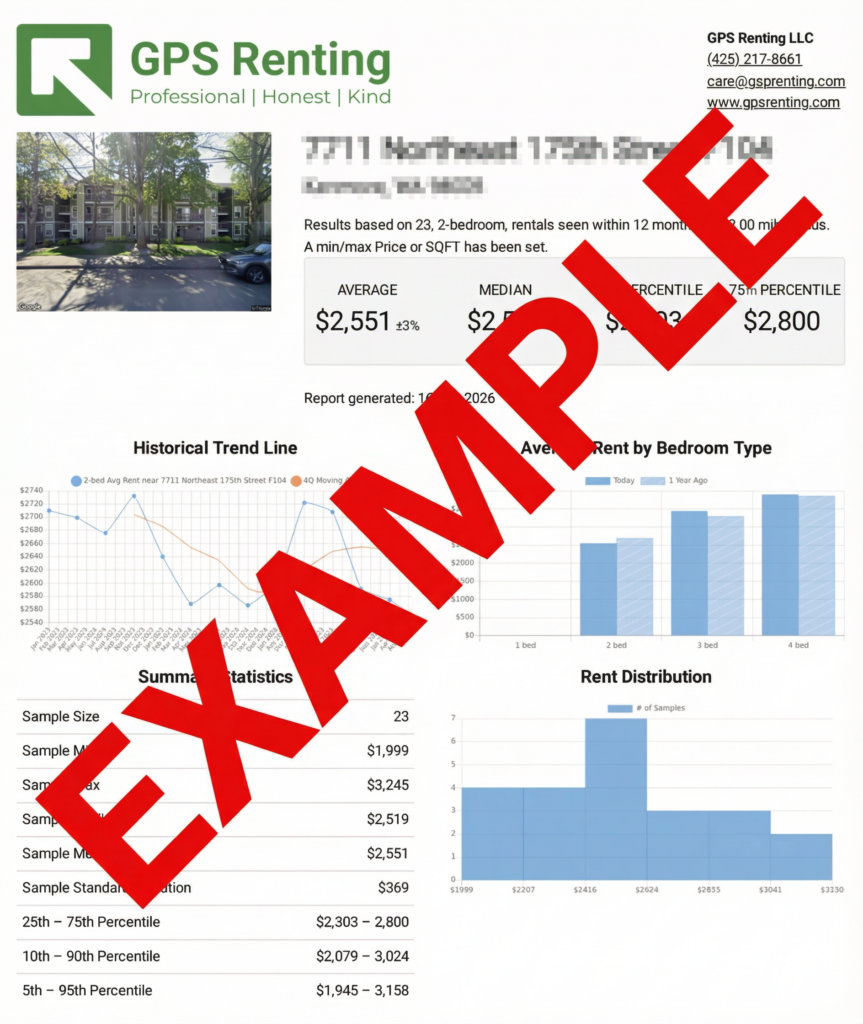
You can also learn more about our services here: Property Management Services in Seattle
What Landlords Should Focus on in 2026
Based on what we are seeing in the market right now:
- Price your property correctly from day one
- Focus on tenant quality, not just speed
- Stay compliant with Seattle and Washington laws
- Invest in professional marketing
- Have a clear system for maintenance and communication
The landlords who follow these principles are still performing well, even in a more balanced market.
Frequently Asked Questions
How much does property management cost in Seattle?
Most companies charge a percentage of monthly rent, typically between 8% and 12%, along with additional fees. Some companies, like GPS Renting, use a simplified pricing model without tenant placement or renewal fees.
How long does it take to lease a property in Seattle in 2026?
In today’s market, most well-priced properties lease within 20 to 45 days, depending on location, condition, and pricing strategy.
Do I need to register my rental property in Seattle?
Yes. Seattle requires rental properties to be registered under the RRIO program before they can be legally rented.
Can I screen tenants however I want?
No. Seattle has strict screening regulations. Landlords must follow consistent criteria and comply with local laws regarding application processing.
Is Seattle still a good place to invest in rental property?
Seattle remains a strong long-term market due to job growth and housing demand, but short-term performance depends heavily on pricing, management, and market timing.
Final Thoughts
Property management in Seattle has become more complex, but also more predictable for landlords who understand the system.
Success today comes down to execution.
It is not about chasing the highest rent.
It is about pricing correctly, selecting the right tenant, and operating consistently within the law.
Want to Lease Faster Without Guessing the Market?
Accurate pricing and positioning make the biggest difference in today’s Seattle rental market.