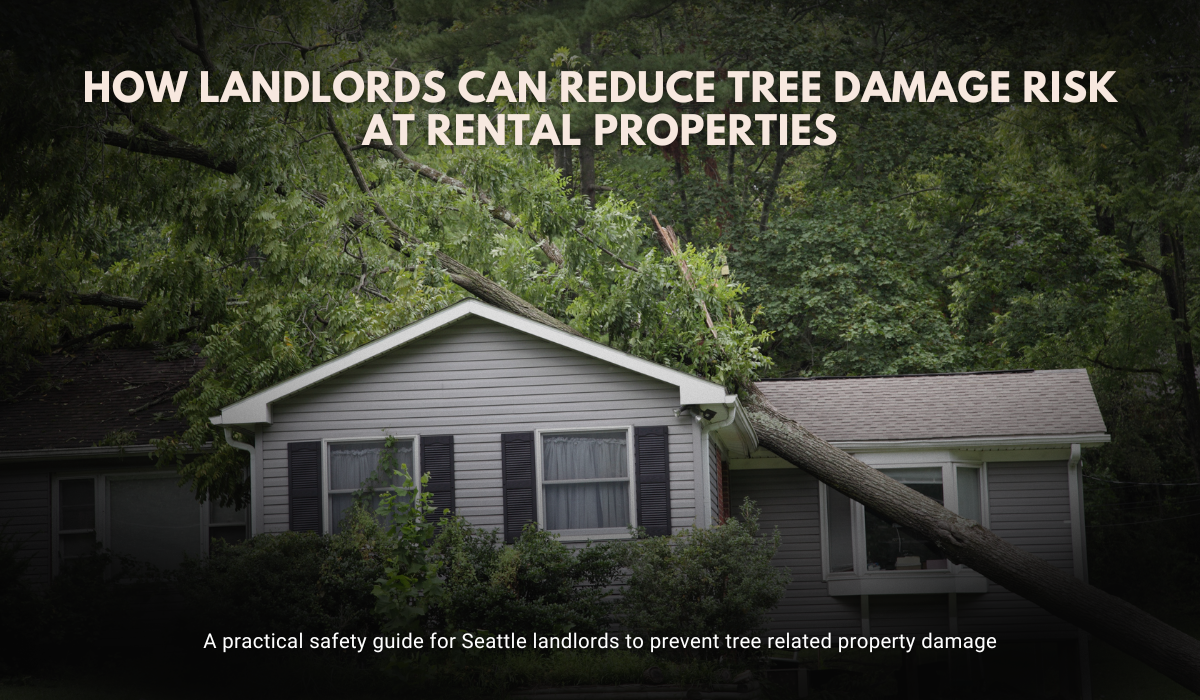
Trees add curb appeal and value to rental homes, but unmanaged trees can create serious liability risks for landlords. Falling branches, root damage, blocked drainage, and storm-related hazards can lead to costly repairs and tenant safety concerns.
In Seattle and the Greater Seattle area, tree risk management is especially important due to heavy rainfall, windstorms, and dense landscaping. A proactive approach helps landlords reduce liability and protect long-term property value.
Why Tree Risk Management Matters for Rental Properties
Trees near rental homes can create several risks:
- Falling branches during storms
- Roof and siding damage
- Blocked drainage and gutters
- Trip hazards from exposed roots
- Power line interference
- Tenant safety concerns
- Liability exposure
According to the National Weather Service, falling trees and branches are a leading cause of property damage during windstorms, especially in regions with saturated soil conditions like Western Washington.
Additionally, the City of Seattle Department of Transportation notes that property owners are responsible for maintaining trees adjacent to sidewalks to prevent hazards to pedestrians and public infrastructure.
For landlords, ignoring these risks can lead to unexpected maintenance costs and potential legal exposure.
Tree hazards often go unnoticed until they cause expensive repairs or safety issues for tenants. Proactive inspections can prevent most of these problems before they escalate.
Want help identifying risks at your rental property? Contact GPS Renting today.
Common Tree Hazards at Rental Properties
Overhanging Branches
Branches extending over roofs can damage shingles, clog gutters, and break during storms. This often leads to leaks and structural issues.
Dead or Diseased Trees
Dead trees are more likely to fall. The USDA Forest Service explains that decay, fungus, and hollow trunks significantly increase failure risk.
Root Damage
Large roots can:
- Crack sidewalks
- Damage foundations
- Disrupt driveways
- Block underground pipes
Trees Near Power Lines
According to Puget Sound Energy, vegetation contacting power lines is a major cause of outages in Washington during storms.
Poorly Maintained Landscaping
Untrimmed trees reduce visibility and create trip hazards, increasing liability.
How Landlords Can Reduce Tree Damage Risk
1. Schedule Annual Tree Inspections
Professional inspections help identify structural weaknesses, disease, and instability.
According to the International Society of Arboriculture, regular inspections reduce the likelihood of tree failure and property damage. https://www.treesaregood.org/treeowner
2. Trim Overhanging Branches
Branches should be trimmed away from roofs, windows, and walkways. Preventive trimming reduces storm damage.
3. Remove Dead or Hazardous Trees
Trees showing signs of rot, leaning, or decay should be assessed immediately. Early removal prevents emergency situations.
4. Maintain Gutters and Drainage
Leaves and debris from trees often clog gutters, causing water damage. Preventive cleaning reduces risk.
Learn more about seasonal maintenance planning: https://gpsrenting.com/seattle-seasonal-rental-maintenance-tips/
5. Protect Tenant Walkways
Ensure branches are trimmed above sidewalks and roots do not create tripping hazards.
The City of Seattle Urban Forestry Program recommends maintaining tree clearance above pedestrian areas to reduce safety risks. https://www.seattle.gov/trees
6. Prepare for Storm Season
Seattle experiences strong windstorms in fall and winter. Preventive trimming before storm season reduces risk.
Learn more about emergency preparedness:https://gpsrenting.com/seattle-landlords-emergency-preparedness-guide/
7. Document Tree Maintenance
Keep records of inspections, vendor invoices, and photos.
Learn more about documentation best practices:https://gpsrenting.com/landlord-documentation-washington-state-guide/
Routine trimming, inspections, and documentation reduce liability and protect your long term investment. A structured maintenance plan makes all the difference.
Need a proactive maintenance approach? Reach out to GPS Renting now.
Who Is Responsible for Tree Maintenance?
In most cases, landlords are responsible for maintaining trees to ensure safety. Tenants typically must report hazards but are not responsible for structural tree maintenance.
According to Washington State Residential Landlord-Tenant Law guidance, landlords must maintain premises in reasonably safe condition.
Insurance Considerations
Insurance providers often require reasonable maintenance. Neglecting hazardous trees may affect claims.
Based on guidance from the Insurance Information Institute, proactive tree maintenance reduces insurance claims related to storm damage.
When to Hire a Professional Arborist
Landlords should hire professionals when:
- Trees are close to structures
- Branches are large or high
- Tree health is uncertain
- Removal is required
- Power lines are involved
Learn more about maintenance coordination services
Preventive care today can help you avoid emergency repairs, tenant complaints, and insurance disputes in the future. Professional oversight keeps your property protected year round.
Ready to reduce maintenance risks and protect your rental? Contact GPS Renting today.
How GPS Renting Helps Reduce Tree Damage Risk
Managing tree hazards takes time and coordination. GPS Renting helps property owners by:
- Scheduling inspections
- Coordinating pruning and removal
- Monitoring tenant-reported hazards
- Preparing for storm season
- Documenting maintenance activity
- Working with licensed vendors
Learn more about how we handle maintenance requests
Proactive maintenance protects your investment, improves tenant safety, and reduces emergency repair costs.
Key Takeaways
- Tree hazards can create major liability risks
- Annual inspections help prevent damage
- Trimming branches reduces storm issues
- Dead trees should be removed early
- Documentation protects landlords
- Preventive care saves money
Want to see the true cost of owning your rental property? Try our calculator
FAQs
Are landlords responsible for tree damage at rental properties?
Yes. Landlords are generally responsible for maintaining trees to ensure safety and prevent hazards.
How often should trees be inspected?
At least once per year and after major storms.
Can tenants handle tree maintenance?
Tenants may report issues, but structural maintenance is typically the landlord’s responsibility.
Do tree roots cause foundation damage?
Yes. Large roots can crack foundations, sidewalks, and driveways.
Does insurance cover tree damage?
Coverage varies, but neglect may affect claims.
When should a tree be removed?
If it is dead, leaning, diseased, or structurally unstable.
Final Thoughts
ree risk management is one of the most overlooked aspects of rental property maintenance, yet it plays a critical role in protecting both tenants and long term property value. Proactive inspections, routine trimming, and proper documentation can prevent costly repairs, reduce liability, and improve tenant safety.
In Seattle’s climate, where windstorms and saturated soil increase the likelihood of tree failures, landlords who take preventive action are better positioned to avoid emergency maintenance and insurance disputes. A structured maintenance plan combined with professional arborist support helps ensure that tree related hazards are addressed before they become expensive problems.
Working with a property management team that coordinates inspections, vendor scheduling, and documentation can further reduce risk while saving time. Ultimately, consistent tree maintenance is not just landscaping, it is an essential part of protecting your rental investment and maintaining safe housing conditions.
Sources
- National Weather Service. Wind Safety and Falling Tree Risks
- City of Seattle Urban Forestry Program. Tree Maintenance Responsibilities
- USDA Forest Service. Tree Health and Hazard Identification
- Puget Sound Energy. Tree Trimming and Power Line Safety
- International Society of Arboriculture. Tree Risk Assessment Guidance
- Washington State Residential Landlord Tenant Law RCW 59.18
- Insurance Information Institute. Trees and Homeowners Insurance.